Showing posts with label Moving Tips. Show all posts

Wednesday, April 14, 2021

Moving Between Moves: What to know about Temporary Housing

 Moving In Between Moves Tip

At TNT Moving Systems, we work with people at every step of the moving process and have witnessed some of the challenges that come with temporary housing. In an ideal world, your moving, closing, and selling dates would all align perfectly. In reality, it’s not uncommon to find yourself with extra days, weeks, or even months between moving dates. This means you have to find a place to stay in the interim; say hello to temporary housing!

Temporary housing is basically what it sounds like; it's a space rented as a temporary, short-term solution while you’re awaiting the move to your next home. For some, this might look like an extended stay at a hotel or AirBnB, while for others, this could be a month-to-month apartment or house rental. There are a ton of great options at a range of prices, and you should definitely be able to find a great place to call home when looking for short term housing, without sacrificing comfort or the necessities.


The 2021 U.S. Housing Shortage

Since 2010, the US housing market has been struggling to keep up with buyers demand for residential real estate. Real estate experts estimate that there are fewer than three months of supply of homes on the market since the 2000’s, which equates to a shortage of about 2.4 million homes. In the 2020 recession, home building was put to a halt in the spring due to the COVID-19 pandemic and subsequent supply chain issues on building materials, which otherwise is typically the busiest season for new construction.

Builders are already more than busy this year, as interest in housing has skyrocketed more than ever. Whether it’s people who realize their home is uncomfortably small or were forced to move home during COVID lockdowns, Americans want more space. Danushka Nanayakkara-Skillington, associate vice president of forecasting and analysis at the National Association of Home Builders (NAHB) estimated that “New construction on single-family homes could exceed 1-million (in 2021).”

According to the National Association of Realtors, the 2021 spring market is starting off with the lowest levels of homes on the market in nearly 40 years. Demand (pending listings on the mark) is outstripping supply (active listings) in 70% of metro areas. Listing prices are rising at double-digit rates in 64% of metro areas. This, combined with aggressive fiscal policy, low mortgage rates, and job growth means that demand for homes will only continue to increase.

Goodbye city-living, hello space!

People are moving away from big city overpriced apartments and townhomes, and reassessing what they truly want and need. For many, that assessment includes space and reasonable housing prices, with a push towards the suburbs, exurbs, and even the countryside. Remote employees are leaving big cities as they can now live in lower cost areas. Post-vaccine America may have different geographical shifts, with a rush to return back to the cities, but for those who are able to keep up their remote work, there may be a collective shift where people want to reside outside of their working hours. Cities tend to have stricter laws, high taxes, and less space for your money. Telecommuting and living in areas with fewer restrictions can make more sense financially. A comfortable, spacious home may be more valuable than what they can afford in the city.

The South and Southeast have seen major growth in the past year, with many northerners fleeing high COVID case cities, cold temperatures, cramped and overpriced housing. Texas, Florida, and the Carolinas have seen the highest growth in the South. On the West coast, mountain states like Idaho, Colorado, and Utah have also experienced similar levels of growth, with people moving away from the expensive coastal cities.

New home construction in 2021

In addition, more entry-level homes are also expected to enter construction this year, which will help the competitive housing market against too many entry-level buyers pushing up prices. Affordable housing is a crisis across the country, and builders are trying to meet the demands for these homes. Southern states, mountain areas, and the Midwest are seeing higher rates of home construction as they offer more pro-business environments, readily available land, and cheaper building permits for potential builders and buyers.

The first rule of building or renovating a new home is to double the time estimate it takes to finish the job. Contractors are rarely ahead of schedule. For those building a new home, construction continues to face problems it has had for years. Between increased lumber prices, limited lot supplies, green space requirements, restrictive zoning laws, costly permits, and a skilled labor deficit since the 2010 recession, there simply aren’t enough supplies, workers, or incentives. Existing homeowners can also pose a problem, as they tend to vote against multifamily construction and low income housing, which drives up land costs.

Buyers awaiting closing amidst a housing crisis

With this scarcity of homes for sale, buyers are more than motivated – we’re talking multiple people bidding on homes, buyers placing bids without ever having stepped foot in a house, and buyers placing bids over the asking price, all of which drive up the prices. The ball is in the seller’s court, for sure right now, which isn’t the best news if you’re a first-time homebuyer looking to snag a home in 2021.

What’s the fix for those buyers in the in-between period? Temporary Housing!

Are you approaching the downtime between your current home and the day that you’re finally allowed to move into the home that you just bought? Or are you building a new home, but managed to sell your existing home before the new one is complete?

Whether you finally get the job you want in the perfect city, are ready to take the leap into purchasing a new home, are caught between selling, buying, building, or renovation, housing is simply unavailable. There is a widespread housing shortage in major cities all across the US. As a result, many buyers may need to utilize temporary housing until they can find the right house or move into their new home.


Weighing Out Temporary Housing Options

While some may be lucky enough to have friends or family willing to host you in-between moves, you’re more than likely going to need to find temporary housing through a rental or vacation company. An apartment broker may be the easiest way to learn about your options in a specific area you’re interested in and be able to filter your choices by rate, location, and amenities. This service is completely free since property managers pay apartment brokers. However, this also means that an apartment broker is mainly searching for short-term rentals and corporate housing options, not vacation rentals or extended stay hotels.

Short term-rentals: Short-term rentals are typical apartments or houses that offer flexible lease terms (e.g. weekly, month-to-month, 3-month, etc.). Typically, the less amount of time you lease, the higher the cost of your monthly rent.

Corporate housing: While similar to short-term rentals, corporate housing is created with the intent of lodging traveling business professionals. People with traveling or contracting careers like nurses or flight attendants may seek out this type of rental, or most popularly, workers undergoing relocation.

Sublets: A sublet is taking over a lease from an existing tenant for a set duration of time or remainder of the original lease. A sublet may require approval from the tenant’s landlord. Depending on the availability of the rental market in your area, subletting may be a good option.

Vacation Rentals: You may only think of sites like Airbnb and HomeAway for people purely vacationing. However, the real aim is to connect homeowners trying to rent out their homes or a room in their house. With rental periods ranging from days to months, vacation rentals are a great way to find temporary housing. Many hosts offer discounts for longer stays, and unlike say, sublets on Craigslist or Facebook marketplace listings, vacation rental sites like Airbnb and HomeAway make the search, comparison of options, communication with the owner, and payment process seamless, both on desktop and mobile.

Extended stay hotels: If you require housing for more than a few days, an extended stay hotel accommodates guests who need the convenience and accessibility of a hotel stay, without the pricey nightly rates of a typical hotel. Different hotel chains offer varying rates, depending on the length of your stay, the quality of the room, etc.


Plan for your belongings during your temporary stay

The biggest issue temporary housing seekers face is figuring out what to do with their things. Some rentals may require you to bring your own furniture, whereas others may come fully furnished and equipped. In either case, you’re probably going to be in a situation where the rental isn’t large enough to house all your belongings, or you don’t want to move an entire home multiple times during your temporary stay.

Storage pods or units may be the best answer in a temporary housing situation. Whether you are waiting on construction or bidding on a new home, keeping your belongings in less expensive storage may be the right solution for your family.

Some might be lucky enough to have family willing to store their belongings in the in-between.


Make use of furniture rentals to avoid hauling your entire house to a short-term stay.

Furniture rentals can be a real lifesaver for a number of reasons. Maybe you’re a young adult just starting out, and wanting to invest in nice pieces rather than hold onto your college Ikea collection. Buying new furniture all at once for a new place is super expensive, and renting can be a great way to figure out what pieces and style you like without the long term commitment. Even in temporary rentals where you can bring your own furniture, you’re probably going to want to reduce the heavy lifting with furniture rental.

Consider: Price of rentals versus length of rentals

You may need to consider weighing the costs against the length of the rental period. Longer furniture rentals may not weigh out in being both cost effective and convenient. Typically, furniture rentals can be a cheap, temporary solution for short, say 1-6 month periods. You’ll find that most furniture rental companies charge (in addition to the monthly base rental fee) a delivery fee, deposit insurance, interest, or even service fees like online payment charges. Some even have a minimum purchase threshold. So between charges, delivery, set-up, and taxes, more often than not, the price of renting furniture ends up being more than just purchasing it. When you purchase furniture, you’re making an investment into a piece to last for years. Depending on your temporary housing stay, you’ll need to weigh out the costs beyond the upfront charges of the rental.

Consider: Your ability to keep the rented furniture clean.

The beauty of owning your furniture is just that – it’s yours to do with however you like. While you’re never aiming to spill that red wine on the sofa or let your pet throw up on a rug rather than the wood floors, accidents happen all the time. When it comes to rental furniture, you won’t have the flexibility of mistakes without incurring direct costs.


Final Temporary Housing Moving Tips

  • If your length of stay is unknown or dates are in flux, communicate with the landlord before booking. A huge factor in finding the right temporary housing is how long you plan to stay versus your budget – and whether or not you require flexibility in extending your stay and add time. 
  • Don’t forget your pets! Go ahead and make certain that you’re filtering for pet friendly rentals from the start, or begin researching for the paw-fect boarding facility for your furry loved ones. Most temporary rentals require an additional monthly fee, and many don’t allow pets at all. Remember, a move is just as stressful on your pet as it is on you, so take their comfort into high consideration as you’re finding an appropriate short term housing solution. 
  • Ask about costs additional to rent. Beyond monthly rent or pet rent, some temporary housing may also have fees for utilities, parking, or general repairs. Since short term rentals already run at a higher cost, you’ll want to know exactly what you’re getting into before signing any contracts. 
  • Book your final move ahead. Better to book with a tentative date than to not book at all, and be left stranded. Ideally, you’ll want to book 6-8 weeks ahead of your move. We know that with contractors and sales, there’s a lot of moving parts that can push deadlines without any warning. At TNT Moving Systems, we will do our best to accommodate your moving goals. 

Tuesday, June 16, 2020

Tips for Moving During the Summer


Found your next home and getting ready to move this summer? We have tips on best practices for moving in the summer, and at TNT Moving Systems, we know just how to make accommodations for the blazing hot and often humid, but gorgeous summer days here in Charlotte, NC.

Are you planning to move between May 15th and August 31st?

Did you know that 70% of all residential moving takes place between May and September? The estimated peak season for moving in the U.S. falls between May 15th and August 31st.
Summer is the most popular season to move, and for good reason! Not only are the highest number of homes for sale during the summer, but it’s usually the best time for families to move, as kids are out of school and if needed, can transition into a new school district at the start of the year more easily. Buyers may also prefer the summer months for moving into a new home, simply because the weather tends to be nicer and more reliable. 

However, even though the benefits of peak season attract buyers and sellers, there are some constraints to consider, especially with the COVID-19 pandemic looming over moves this summer.
Social distancing is still the best method for preventing the spread of coronavirus, but the CDC recommends that masks are worn in places where social distancing isn’t possible. Should you wear a mask while moving? 

In short, the answer is yes. If you plan on hiring a moving company, the movers will likely via company policies be wearing masks, or if you informally find friends to help you move, you should all wear masks as much as possible. Moving into a new home will mean that you’re all in a very close-contact environment and conducting strenuous physical activity. With any close-contact physical activity right now, it’s important to respect the shared space by wearing a mask and limited the spread of COVID-19.

Obviously, the more activity you’re partaking in, the more your breathing will increase, and the more you’re breathing, the greater chance that you will spread the virus if you have it or are carrying it. When everyone involved wears masks together, it is far more effective in reducing the spread of COVID-19.

What should I look for in a mask for moving?

Proper fit
The most important thing to look for in a mask is proper fit that keeps the mouth and nose consistently covered. You do not want to constantly adjust the mask and touch your face, and if the mask is too tight on the ears causing you to pull the mask down due to discomfort or too loose around the face, then wearing a mask isn’t useful. 

Moisture-wicking material
You will also want to find a mask made of materials that wick moisture away from the wearer. Certain mask materials can get wet and begin to touch and stick to your face, meaning particles from outside the mask can begin to seep into your mouth and nose. 

Breathability and air-flow
The element of breathability is the most important of all, especially as you’re experiencing physical activity in often very hot environments. Unfortunately, the breathability of a mask is often a trade-off when it comes to protection. If you use an N-95 mask, which is known for its ability to catch 95% of particles, then this optimization for protection is a trade-off for its limited breathability. N95 masks have very strong filters that for those not used to wearing masks, and when you’re breathing heavily it can make it seem much more difficult to breathe.

If you aren’t used to wearing an N95 mask, medical professionals recommend that you make a transition into wearing a mask, such as wearing a mask in short increments while exercising or packing things around the house just to gain an increased level of awareness with how you normalize your breathing and regulate your body temperature. Covering your nose and mouth with a mask can make it more difficult for air and heat to leave the body, so checking in on how you feel and adjusting your flow while moving may include taking more breaks, drinking more water, or ensuring that the air conditioning and fans are on to increase airflow in the house.

Alternatively, if you want a better balance between breathability and protection, your best bet may be masks that are 100% cotton. The best cotton masks will provide two layers of protection and the option to include a filter. Masks that are the pleated masks, muzzle-shaped, and provide a nose wire for a closer fit to your face provide the best protection. It is also recommended that you use a mask with elastic earpieces that aren’t too tight or too loose, and rest securely against your skin. Tie masks are less effective since they come loose more easily, and aren’t as easy to remove when you are needing a break outside. 

If you have medical concerns about wearing a mask during the exercise of moving, you may want to talk to your doctor about whether it’s safe for you to do so, and plan ahead of time how you might accommodate your mask-wearing on your move day. 

Where can I buy a mask that would be good to wear while moving? 

There are plenty of options on where to purchase a breathable, elastic mask, and we’ve got you…covered! Check out some of these options (not sponsored, availability subject to change).

Etsy
Etsy has numerous sellers with a variety of types of masks and fabrics. Most shops selling masks are available to ship within three days, and you can also read reviews to find a high quality, reputable seller. Here are just a few sellers we found
Facebook Marketplace
If you want to support local creators, many people are selling handmade masks on Facebook Marketplace right in your neighborhood. You may also be able to find people selling in bulk the more difficult-to-find N95’s or surgical masks as well. 

Big Box Stores: Walmart, Lowes, Home Depot
Pre-COVID, hardware stores or home-repair sections in stores were the easiest places to find masks. Check with your local store to see if they have masks in stock. 

Pharmacies: Walgreens, CVS, etc.
Many local pharmacies have restocked masks supplies, and even offer curbside pickup. 

Online clothing retailers & stores
Check out your favorite clothing store, and chances are on the homepage you’ll find an offer for a cloth facemask. For example, Madewell, Old Navy, Banana Republic, Forever 21, Rag & Bone have all started selling facemasks for a low cost and low shipping. Many other stores that sell home goods or bedding, and just businesses aiding in providing a new service during the pandemic, have also shifted to producing masks. 
Moving in the heat, made easy!

The sweltering summer sun and high humidity in Charlotte can make a summer move difficult for those doing the heavy lifting. Keep these tricks in mind to keep your move cool:

Start early in the day
Trying to beat the heat? If you’re able to do so, start as early in the morning as possible. A move in the summer afternoon in a hot climate is not going to be pleasant; temperatures are at their highest between 11-3pm, with the sun’s intensity being greater and the UV rays being stronger. Not only will you avoid sunburn by starting earlier, but early mornings can mean a much cooler move. Most moving companies will also prefer to start earlier in the morning during the summer, rather than later in the day. 

Apply sunscreen throughout the day
Whether you prefer lotion or spray sunscreen, ensure that you cover your entire body (don’t forget the face, neck and ears!) with a sunscreen that has an SPF of 30 or higher and that is water-resistant. You’ll want to apply sunscreen 15 minutes before sun exposure, and reapply every 2 hours. 

Aim for light, loose, and breathable fabrics
Dressing for a summer move is a breeze, especially with the popularity of athleisure. Look for lightweight fabrics like cotton or linen that absorb sweat and moisture, or wear athletic-style clothing that’s made to wick moisture away from your body. Avoid synthetic fabrics like rayon and polyester, and avoid dark colors that attract heat. Ensure that you wear a hat and bring sunglasses to protect your head and face from the sun. 

Ensure that your utilities are turned on before Moving Day!
Cooling down your house a few days ahead of time is essential before a hot move on a summer’s day. Beyond that, you’ll want your water turned on as well to make sure that you have access to clean, running water for staying hydrated, using the facilities, and showering after a long sweaty day in your new home!

Move heat-sensitive items either first or last.
All of your belongings may not fare well in the heat, and the inside of a moving truck during the summer can reach temperatures of 120 degrees. Paper items and electronics are typically fine in the heat, but items like loose photos may start to emulsify and stick together if they aren’t in protected pages. Candles, cameras, shrink wrapped clothes may melt, warp, or ruin other items that they’re boxed with. Many plants cannot withstand extreme high or low temperatures for long, and should also plan to be moved carefully.

You can also take into consideration how long items are sitting in a truck; is it for days as you move states or take longer to unpack a track, or a few hours as you move across town? In either case, ensure that you keep valuables, sentimental items, and heat sensitive items are packed in your personal vehicle and brought into the air conditioning or a climate controlled room as soon as possible.

Keep cool.
Setting up a couple of portable fans around the house, especially in the garage, and opening doorways and encouraging airflow will greatly benefit you during the moving process. These fans are typically inexpensive at around $10/piece, and can be found at any big box store. Coolers also come in handy, if you can fill a cooler with ice and keep damp washcloths inside to provide cold towels for everyone involved in the moving process. Exposure to high temperatures can be very dangerous, so remaining vigilant for signs of overheating and heat-related illness is essential. If someone shows symptoms of overheating or heat exhaustion, get them to rest in an air conditioned space as quickly as possible, and provide water and cold towels to cool down, and seek medical attention if needed. 

Move with confidence this summer.

If you’re moving in the summer, you are automatically in increased competition with other buyers to find a reputable, reliable, and affordable moving company for your moving date. Moving companies during the peak moving season are in great demand; high demand for movers means that you will most likely be dealing with higher moving costs and limited availability. If you do not secure a highly rated moving company ahead of time, you may have to sacrifice the quality of services for your move.

As soon as your moving date is confirmed, book a moving company you can trust. TNT Moving Systems can talk to you today at (704) 523-1455 about availability, pricing, COVID-19 precautions and more.

Monday, January 13, 2020

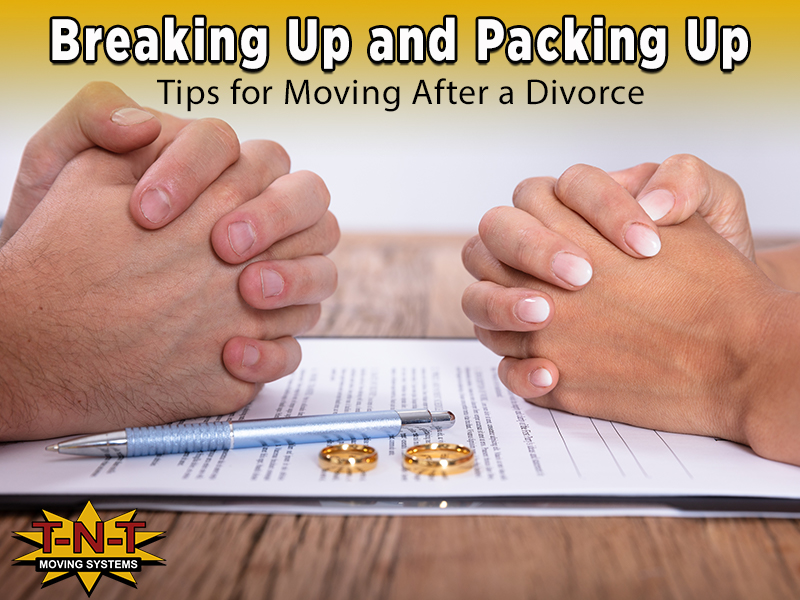
Breaking Up, and Packing Up: Tips for Moving After a Divorce

Tips for Moving After Divorce


Divorces can be tough, but moving doesn’t have to be. TNT Moving Systems has you covered on how to plan for a move during or after a divorce, peacefully separate your belongings, and make it through the days and weeks leading up to the big move.

What kinds of divorces are there and how could they impact your move?
  1. Hostile takeover of the house
This could entail a locksmith coming to your home, changing the locks, and leaving one partner locked out suddenly. In a hostile takeover, it’s to be assumed that this is a high-conflict and malignant divorce.

  1. Semi-peaceful separation
In this case, both parties have agreed to the moving plan, but there still may be issues to iron out, such as the separation of items in the house.

  1. Peaceful separation
A peaceful separation entails both parties are in agreement, and are amicable with one another enough to settle the divorce.

Before the Divorce Move:
Settle any major legal issues before starting with your moving plans.
From legal affairs to custody battles, and boundless stress, a divorce isn’t easy for anyone involved. Moving out before major legal issues are settled can bring about even further chaos down the line.
If you are moving out of state, your lawyer will need to be aware of your plans. Moving states prior to the finalization of a divorce can complicate the proceedings. If you have custody of children and plan to move out of state, failing to appropriately inform the spouse about your move can lead to that partner filing objections or changing the original custody agreement. Some states even require you to file a petition to move out of state.
Talk to your lawyer about the timeline of these processes, and make sure you can meet all of your legal obligations before the moving day.

Sell the house. Find a new place?
You may be the one who keeps the house, or you may be the one moving out. Sometimes, both parties agree to sell the house and move on. You might move in with a friend or back in with family, move cities or states, or perhaps into a new apartment. In any case, a divorce entails lifestyle changes.
A house previously shared by you and your partner may be too much financially or emotionally in the next phase of your life. Moving can entail downgrading the style or space of the house.

7-8 weeks out from the move is the important timeline for:
  • Preparing to tell your children that will be moving or a partner will be leaving the home
  • Informing the children’s schools that they may be moving, and giving yourself time to find another school for the children to enroll in
  • Increasing your chances of moving on your preferred date when scheduling with a moving company
  • Hiring professional packers and house cleaners, if wanted

Work with a professional to sort out high-stake items and who-gets-what.
The rush for one partner to leave the house isn’t worth the headache of getting to the day of moving and arguing over a bedroom set. Meet with a legal professional or mediator and take the time to have both parties agree on who will take, leave, or sell the items in the home. It may seem tedious, but with the stress of a divorce and the emotional toll on both parties, neither partner wants to spend the moving day arguing over the items in the home or later regretting giving away something sentimental or expensive for the sake of keeping the peace. If you’re paying a moving company, this will ensure that their labor the day of is as efficient as possible.

5 or 6 weeks before the move is a good time to begin sorting your belongings, splitting items with your partner, and agreeing on who gets what. Consider the space you’re moving into, be practical about what you absolutely need and want, and decide what you can do without. If you have items to sell, donate, or toss, you’ll have plenty of time to handle them. If there are items you may need to wait on due to a lease or if you’re planning to temporarily move into a smaller home, you might consider renting a storage unit.

Ensure you start packing at least 4-5 weeks out and label boxes clearly.
What has worked in previous, conventional moves to label your belongings may not work in a divorce move. If both partners are leaving and labeling boxes as vaguely as “Bedroom” or “Kitchen,” then there’s bound to a mix up. Break out the bold Sharpies, and be extremely meticulous in your labeling and sorting, even if it means assigning one color to one partner’s boxes, and an opposite to the other. Write on the top and two sides of the box to increase ease of visibility.

Start packing by finishing one room at a time before moving on, and boxing similar items together. Make sure you don’t pack away items you’ll need prior to the move, but be mindful of how you can minimalize your lifestyle leading up to the move.  Having an essential items box can be handy for your first night in a new home.

During this time, you may want to start cleaning your house as you clear the rooms. Empty your lawn mower and weed eater of gasoline. Areas and items that may take a while to clean could be your windows, the oven, and garage; you’ll be glad you tackled them ahead of time, instead of on moving day!

Make important notifications regarding any change of address.
Your bank, insurance, driver’s license, and other state and federal agencies should be notified of your change in address 3 weeks out before moving. You’ll also want to set a disconnect date for your utilities, and a connection date for your new move-in.

Here are few to keep in mind:
  • Gas
  • Water
  • Electric
  • Phone/Landline
  • Internet
  • Trash/Recycling
  • Cable
  • Mail-forwarding
  • Bills
  • Doctors
  • Subscription services
  • Retirement accounts

Reach out to your support system.
Reach out for help from the people in your life who care about you, like family and friends – and of course, the people at TNT Moving Systems (who will definitely be of great help on moving day). Having people help you move can make the day go by faster, and keep your spirits lifted during a difficult time.

Decide how the moving day will proceed, based on the type of divorce.
Based on how the legal affairs are settled and how splitting the items are going, you’ll probably have a fair idea on whether you and your spouse should both be home during moving day. If you truly can’t get along for even a day, you may want to plan to move when your spouse isn’t at home. If there is potential for violence during your move, request a police presence on your moving day. Keeping yourself safe is the main concern, and you should not be afraid to have a police presence – this is not an uncommon practice.

Tips for Moving After Divorce
During the Divorce Move:
Set ground rules for behavior and expectations for the day, and ask that all people involved in the move hold themselves accountable.
Having a friend or family member with you on the day of the divorce move can be great, but more people can also mean more chances for snarky remarks, confrontations, and provoking comments if both partners are present. It can help everyone involved to start the day by asking everyone there to keep the peace, despite how uncomfortable the situation may be. Of all the tips, we know this may sound like the most insurmountable feat, but asking for one day of peace and sticking to it can lead to an all around better moving experience.

If there are children in the relationship, this may be a good time for a family member or friend to take the children out of the house for the day.
Moving out of a childhood home or witnessing a parent who’s in emotional distress leave a house can be jarring and traumatic for a child, no matter the age or maturity. If it’s within your budget or you have the resources to lean on, consider having someone take the kids out for the moving day.

Furry pets will also be happier staying with a friend or in boarding.
We love our pets dearly, and the emotional support they provide in trying times is absolutely unparalleled. However, in the urgency and chaos of a divorce moving day, pets will not understand what’s going on.
Pets can undergo a lot of stress whether they’re experiencing the packing, moving, and unlikely schedule, the scariness of strangers coming in and out of the house, or just the noise that comes with tearing down, packing, and moving items out of a house. A divorce move is the last possible time that you want your pet to be in danger of running out of the house, getting in the way or stepped on, or becoming stressed out from the situation. Boarding your pet with a friend, vet, or daycare can ease your mind that they are safe and happy, as well as simplify your moving day.

Final Pro-Tips
Don’t be too quick to toss your marital keepsakes.
When it comes to sensitive items like marital keepsakes, wedding photos, or mementos from dating, it can be tempting in the divorce move to toss them and move on. However, letting your post-divorce emotions settle is important. There may come a day when you want to look back on that time in your life or share it with those who are important to you. Consider boxing it away safely, and returning to it at a later time.

Personalize your new home.
Moving is always a great opportunity for a fresh start. When you’re moving somewhere new after a divorce, it’s important that your space invites healing and positive energy. It may be a good time to switch up the furniture, rearrange, and have a fresh outlook on the newest phase of your life.

Be kind to yourself during the process.
The moving day during a divorce can feel like insanity, finality, happiness, and sorrow all at once. The first day out of a house, or in a new home can be the hardest. Be kind to yourself. Utilize your time throughout the move to practice self-care, such as making sure you eat two to three meals a day, exercising, catching up on rest, or meeting up with a friend.

No matter the circumstances of your divorce, we’re here to help.
It’s important that you honestly communicate your moving situation to TNT Moving Systems, especially as it may affect your moving day. If you would like to discuss with our moving professionals about how to keep your move discreet, such as in the case of domestic violence threats, we can talk with you about our options to keep your move low-key, organized, and safe. Your safety is very important to us at TNT Moving Systems.

Find a Good Moving Company in Charlotte, NC
Going through a divorce move? You don’t have to do it by yourself. Make sure that you choose a reputable moving company that is fully licensed and insured, has reliable, trustworthy employees, and affordable packages. Let TNT Moving Systems help you move on by contacting us today.

Wednesday, February 28, 2018

What To Move Yourself: Things To Pack In Your Vehicle


T-N-T Moving Systems knows how stressful the moving day can be. Our goal is to help make the moving process as smooth and as stress-free as possible. Give us a call and we will show up on moving day, load everything into our truck, and bring it safely to your new home. However, you don’t want to put everything in the moving truck. When you get to your new home, it is likely that you will be tired and the task of unpacking all of your things is daunting. Here are some tips for what items to pack in your own vehicle.


Everyday Clothes
Whether you are moving across the country or just across town, make sure you pack a bag of clothing to take in your car with you. Sorting through all your boxes takes some time. You will want to know where your clothes are right away rather than tearing apart every box you see. We recommend packing enough clothes for between 1-2 weeks to give you time to unpack.


Toiletries
Traveling is exhausting and taking a relaxing shower is the perfect way to prepare for unpacking your new home. Pack a toiletry bag with essentials like a towel, shower supplies, a toothbrush and toothpaste, face wash, and a roll of toilet paper. Taking a bag with these essentials will make the transition to your new home go smoothly.


Valuables
We recommend that you pack and move your valuables in your own vehicle. Items like jewelry, small electronics, and important documents will be safest to travel with you. Sometimes items just get thrown in a box and you may not finish unpacking for a while. Taking valuable items in your car will help you keep track of them during the move.
These are few ideas for what to pack in your own car. It is also a good idea to have a box with essential moving items labeled and easily accessible. Items like eating utensils, chargers, trash bags, clean sheets, and a box cutter should be easy to find so that you can unpack quickly.
For everything else in your home, you can trust that T-N-T Moving Systems will safely deliver all your belongings to your new home. To get a quote for your move, give us a call at 704-523-1455, or for more moving tips, check out our blog.