Tuesday, August 18, 2020

Can't Throw Your Indoor Event? Move It Outside!

 Power Outages in Summer

Picture this. After a strikingly hot and humid North Carolina summer day, with temperatures hitting 100 at the peak of the day, nighttime sees the temperatures falling to a slightly cooler 73 degrees. After turning off all the household appliances, minus motion-activated night lights and plugging in your cellphone to charge, you flip the switches off and head to bed. A perfect night’s rest might strike a delicate balance between a ceiling fan, 68-71 degrees on the thermostat, and the soft choir of chirping critters outside—maybe even a daily thunderstorm rolling through town, an excellent background for a full REM cycle.

And then, the power goes out.

First thought? How long is this going to last? Second thought? Do I need to get out of bed? And third thought? AH, my fridge!

Now depending on the situation that caused the power going out, that range of thought can certainly vary. What doesn’t change is how you should prepare for a power outage, whether you’re faced with a long-term outage from damage sustained in a natural disaster, or just a summer storm knocking out the power for a day or so.

Emergencies can happen at any time! The best way to be prepared for an emergency is to have a plan in place. TNT Moving Systems has you covered on what to do and what you need to know in order to be ready in the case of a power outage.


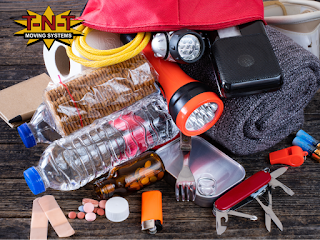
Prepare a Lights-Out Box

In case of an emergency, it’s good practice to have a box set aside (somewhere you can easily find it, especially in the dark) to handle power outages.

What should I keep in my lights-out box?

  • Bread
  • Milk
  • Toilet Paper


That was a test! If you laughed, you’ve lived in North Carolina for at least a year. If you didn’t find that funny, check out the aisles where the latter items are typically found at the store whenever the next state emergency, lockdown, call for snow, or impending hurricane hits the news.

So, what should I actually keep in my lights-out box?

  • Flashlights
  • Batteries
  • Battery-powered lanterns
  • An emergency radio
  • Matches
  • Lighter
  • Whistle
  • Glowsticks
  • First-aid supplies
  • Prescription medicines
  • Digital thermometer
  • Water for three days
  • Dried and canned food for three days
  • Portable phone charger
  • USB cable


Most of the items are pretty self-explanatory, but note that government agencies and survivalists don’t recommend gas lanterns or candles as your go-to during a power outage. Battery-operated lights are the safest option, especially in regard to setting an accidental fire.

Keeping your devices charged can be vital to receive news alerts and to keep in contact with relatives and friends. You’ll want to be able to call the power company to report the outage, as well to receive any updates it.


Fill Your Tubs and Sinks with Water

In case of a power outage being extensive and rendering the water sanitation system not functional, you’ll want to ensure you have enough clean water for a few days.

In addition to any bottled water, filling up your tub and sinks provides you with water to cook and clean with. If you don’t have a bathtub, it would also make sense to use any clean buckets and pots or large bottles you have on hand and fill them with water as well. You can drink water from your hot water heater, as well. You’ll want to fill whatever you have on hand if you suspect the power may go out for an extensive period of time.


Did you know...

The most serious problems from a power outage are water related? According the National Academies of Sciences, Engineering, and Medicine, an adequate daily intake for a woman is 2.7 liters, and 3.7 liters for men. Moreover, an average American uses about 300 gallons of water per day. Those 300 gallons are used up mainly between our appliances, think: faucets, showers, toilets, clothes washers, and dishwashers.

When the power goes out, such as when a storm involving very heavy rains and flooding, you should prepare for water contamination and potentially being without running water. While you certainly won’t be able to stock up for 300 gallons a day, you’ll want enough water on hand to ensure your basic needs are met for at least a few days.

Understand your water situation at your current residence. Are you on city water? Do you rely on electricity to pump well water? If the power goes out, water purification systems may no longer work. In this case, you need to have safe water for drinking, cooking, and your personal hygiene. Safe water includes bottled, treated, or boiled water. To disinfect your water, you can either boil your water for 1 minute before use, or disinfect with bleach. To disinfect with bleach, add 1/8th teaspoon (8 drops) of unscented household (5.25% concentration) liquid bleach for each gallon, stir well, and let it sit for at least 30 minutes before use.

While water from the tap stored in a bathtub or sink may not taste great, staying hydrated is very important. Adding a powdered mix like those for flavoring water, Nesquik, or Hi-C are great solutions for masking the taste, or if it’s colder outside, you can always make use of instant coffee, tea bags, hot apple cider mix, and cocoa on hand to stay warm.


Have a hygiene plan in place

Think you’re going to lose power? You should start eyeing any piles of laundry and dishes. You’ll want enough clean clothing and at least some dishes available for use (not talking about fine china here, guys) for a few days. If you use cloth diapers with your child, consider having an emergency pack of disposable diapers.

Hand washing for 20 seconds is more important than ever in 2020, and you’ll want to ensure that you have soap and water for frequent hand-washing. If you’re closely rationing your water, use alcohol based hand sanitizer.

Remember how we filled our bathtubs and sinks up with water? Well, besides your one first freebie flush, the toilet won’t refill during an outage! This is where your stockade of water comes in. It should probably go without saying, but you’re not going to want to flush very frequently during an outage. Preserve your water supply, and be crafty. For example, you don’t need clean water to flush a toilet. Use dirty dishwater, water from laundry, or leftover water from brushing your teeth or washing your face.

If you aren’t able to flush, you can put a garbage bag in the toilet and change it regularly. If you’re more rural-located, you may be able to set up a composting place outside away from any water sources to safely dispose of human waste. If you’re located in an urban area, such as uptown Charlotte, and living in a shared space like an apartment or condo complex, you will want to set up any compost area at a community level and communicate with your neighbors. Without clean water and normal hygiene and sanitation levels being met, community spread of illness can be rapid.

Also, don’t forget to have a reserve of toilet paper!


Keep a reserve of food, and try to avoid spoils

Your refrigerator can keep food cold for about four hours if left unopened, and a full freezer can keep food cold for 48 hours, and a half-full freezer will keep food cold for 24 hours, all dependent on the doors remaining closed. Check your fridge thermometer to ensure the freezer is at or below 0° and the refrigerator is at or below 40°. Move easily spoiled and not immediately needed items like milk, leftovers, fresh meat, eggs, etc. into the freezer so that they may be kept at a safe temperature longer. The closer the food is together in the freezer, the longer it will stay cold.

If any previously refrigerated food is above 40° F for more than two hours, or 1 hour at temperatures above 90° F, then the food must be discarded – it is not safe to eat. After the power comes back on, if the temperature of the fridge is 40° F and freezer is 40° F or below, then it is safe to refreeze and cook.

In addition to a freezer, coolers are great to have on hand. The ice tray from the freezer, purchasing ice, or freezing gel packs or bottles of water are great to have stored in the freezer in case of an emergency.

If there is any risk of flooding and coming into contact with contaminated water, move all food onto the highest shelves. The same should be done for a supply of bottled water.


Be mindful of refrigerated medication

Many drugs require refrigeration to maintain their strength. Read the labels on all refrigerated medications for instructions on how they should be stored. If the medication is essential to one’s livelihood and has been kept at room temperature during the outage, then the CDC recommends using the medication only until a new supply can be provided. If the power is out for more than a day, refrigerated medication should be thrown out and replaced.


Stay cool without A/C during an outage

The CDC warns that heat stroke, heat exhaustion, heat cramps, fainting, and dehydration are among the most serious heat related illnesses. If someone is without access to emergency care or treatment, heat illnesses can cause death or permanent disabilities.


  • For those at a higher risk of heat illness, seek out an aid shelter by contacting your local health department or find a public space with air conditioning that you can spend a few hours in, if possible. Even a few hours in air conditioning can make a difference.
  • Go low. Heat rises, and cool air collects downstairs. A basement is the perfect place to be when the power grid goes dark.
  • Keep shades drawn and windows closed during the day, and at night, keep your windows open to let cooler evening air in. You want to avoid direct sunlight on yourself and your home, as much as possible.
  • Close off the warmest rooms in the house; think: doors to upstairs rooms, or rooms that are just naturally warmer than the others.
  • Hang wet sheets. It worked for the Egyptians, and it will work in 2020. Be mindful of your water supply, of course, but damp sheets hung in doorways and windows can help cool your home through evaporation. Before bed, you can also dip and wring out your sheets in water to cool the air around you.
  • Keep a misting bottle on hand for every person in the family, equipped with clean water.
  • Wear loose-fitting, light-weight, and light-colored clothing. Bathing suits actually have the best breathability!
  • Invest in some quality, battery-powered fans.


Unplug your electronics

Any sensitive electronic items or appliances like computers, laptops, gaming systems, cell phones, and TVs should be unplugged to be protected from a potential power surge when the power returns.


Check on your neighbors

While you may be prepared for an emergency power outage, others may not be. Check on your neighbors, and ensure that they also have a flashlight, water, and food. Have a plan for communication to ensure that they can be checked on regularly if there are concerns for their safety, especially those who are elderly, have young children, or persons with disabilities.


TNT Moving Systems: Plan, Prepare, Act, and Help Others

For more information on how to prepare for and handle power outages, we recommend resources such as the CDC, FDA, Ready.gov, FEMA, and the local Charlotte government health department. While most power outages are brief and resolved within a day, it’s important to be prepared for prolonged outages. Remember to stock your lights-out box and reserves, develop an emergency plan to address the needs of your family, prioritize clean water, and stay safe out there!

Tuesday, July 14, 2020

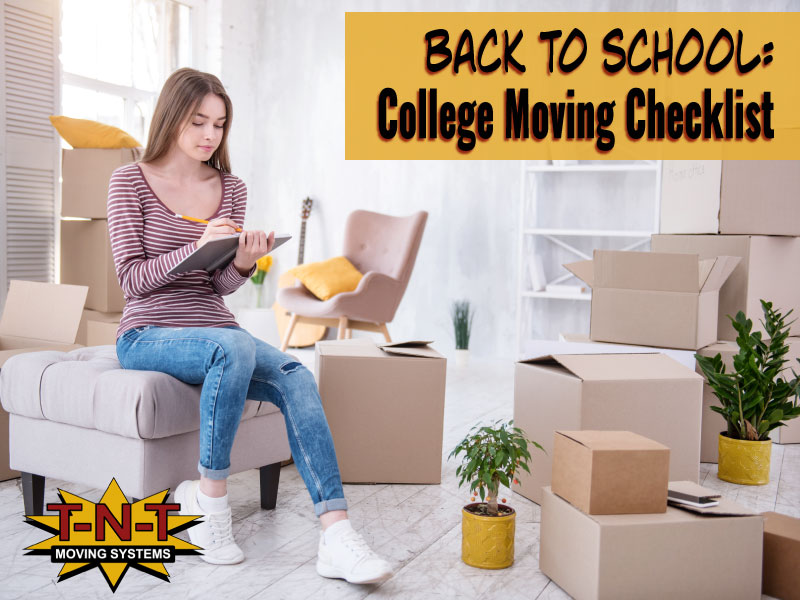
Back to School: College Moving Checklist


  • What you want to have for starting/going back to college (taking the current time/situation into consideration)
  • Might have to work from dorm room
  • Good desk, chair, laptop, lamp (all important for working remotely)
  • Subject to lockdowns on campus
  • How to create your own workspace in a dorm
For students heading back to college the past few years, it was pretty easy to know what to expect. Freshman knew that they had to stock up on all the essentials while being limited to the shared two-person room and communal bathroom. Returning students might have made the change of upgrading from a dorm to an apartment, seeking out hand-me-down furniture or making trips to IKEA. There would probably be some planning with parents, and bribery of siblings and roommates to help get moved in, and then students wouldn’t have to worry about moving out until the end of the school year.
However, 2020 turned out a little different than expected. The outbreak of COVID-19 brought uncertainty into all education systems. The end of the 2019-2020 school year saw the introduction of COVID-19, and the dismissal of students and professors from campus, classes moving online, and graduations either being cancelled or going virtual.
Now in July, administrations are still working on their plans for the 2020-2021 school year. Rising freshman, who in the past would be spending their final summer before college excited and eagerly looking forward to moving on campus, now may be just as anxious as they were waiting for their acceptance letters. As of now, many colleges have still not released a timeline for students moving into or returning to campus for the fall. Students need to prepare for the possibility of further social distancing orders, quarantining at school if sick, fewer in-person class offerings, or completely returning home to transition back into online learning.
At TNT Moving Systems, we understand that the 2020 fall semester is going to be different for everyone, but planning ahead will ensure that you are prepared to succeed no matter how COVID-19 shapes the school year. We wanted to help students prepare for the upcoming school year with a COVID-proof, college move-in checklist that’s good to go whether you’re moving back into your college apartment, are a freshman heading into your first dorm, or taking on a hybrid semester of remote and in-person learning.

Dorm Checklist
Due to limited space in dorms and college apartments, roommates typically work together to limit unnecessary overlap of items brought into shared spaces. With the pandemic, you may want to re-consider what items should be shared or kept personal to limit the spread of germs.

Bedroom Supplies
  • Under-the-bed storage trays
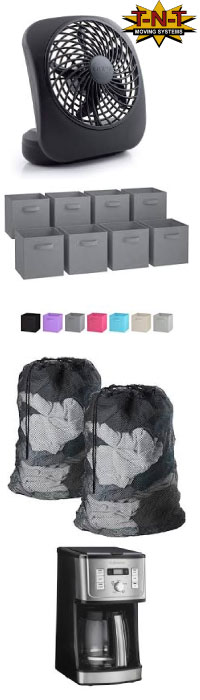
  • Storage bins
  • Small refrigerator
  • Microwave
  • Desk storage
  • Hangers
  • Curtains and rod
  • Desk lamp
  • Trashcan and bags
  • Bed risers
  • Over-the-door storage hanger
  • Bulletin board and push pins
  • Dry-erase wall calendar or board
  • Portable fan
  • Clock
  • Closet organizer

Linens & Laundry Supplies
  • Sheets and pillow cases (2 sets)
  • Towels (3 of each – bath, hand, and face)
  • Pillows
  • Mattress pad
  • Comforter
  • Blankets
  • Throw blanket
  • Laundry basket
  • Laundry detergent, stain remover, fabric softener
  • Delicates laundry bag
  • Lint brush
  • Mini sewing kit

Kitchen Supplies
  • Coffee maker
  • Coffee mugs
  • Reusable water bottle
  • Plastic cups
  • Dish soap
  • Scrubber and sponges
  • Small dish towels
  • Foil
  • Paper towels
  • Disposable forks and spoons
  • Small silverware set
  • Can opener
  • Oven mitt
  • Pot & pan
  • Bowl, plate, and cups
  • Ziplock bags
  • All purpose cleaner
  • Food storage containers

Health & Toiletries
  • Antacids
  • Ibuprofen, Acetaminophen, Aspirin
  • Cold/cough medicine
  • Vitamins
  • Bandages/antibiotic ointment
  • Cough drops
  • Shower caddy
  • Shower shoes/flip-flops)
  • Shampoo and conditioner
  • Hairstyling products
  • Bath and face soap
  • Toothpaste and toothbrush
  • Dental floss
  • Brush and comb
  • Hairstyling products
  • Hairstyling devices
  • Razors and shaving cream
  • Lotion
  • Face moisturizer
  • Cotton balls and swabs
  • Toilet paper

Personal & Miscellaneous Items
It’s more important than ever to ensure that you have everything you need in case of an emergency. Keep your valuable belongings like emergency contacts, medical insurance information, and ID’s in a safe, but accessible space. It’s also a good idea to take photos with your phone of your ID’s like your driver’s license and your medical insurance cards in case they are lost or misplaced.
  • Umbrella
  • Small toolkit
  • Weekend bag
  • Car registration & insurance
  • Medical insurance card
  • Driver’s license
  • Student ID
  • Social security card
  • Debit and credit card
  • Emergency contacts
  • Bicycle
  • Bike lock
  • Combination lock
  • Safety pins
  • First aid kit
  • Flashlight
  • Adhesive hooks

Basic food list
Many schools are planning to implement more to-go and delivery options to students, and limit close-contact, seated dining options. For students with dining plans and without, it’s important to have snacks and food options in your room. Fresh fruit and vegetables are great to have on hand, but will spoil over a two-week period, and if you have a meal plan, these are typically things you can snag from a dining hall instead. With the possibility of having to quarantine at school, we recommend that you stock up on non-perishable foods that will last.
  • Canned goods like soups, fruits, beans
  • Rice
  • Pasta
  • Frozen foods
  • Popcorn
  • Chips
  • Sodas
  • Bottled water
  • Electrolyte-based liquids like Pedialyte or Gatorade
  • Cereal
  • Granola bars
  • Condiments
  • Juice boxes
  • Peanut butter or almond butter
  • Bread
  • Fruit snacks

Remote Learning in the Dorm
Although some colleges plan to return physically in the fall, classes may be susceptible to quarantine periods in the case that a teacher or student is exposed to COVID-19, or administrations implement stricter distancing rules. In either case, ensuring you have the right equipment to learn online is vital.

Electronics
  • Laptop
  • Monitor
  • Noise-cancelling earphones
  • HDMI cord
  • Ethernet cord
  • Extension cord
  • Wireless mouse
  • Printer
  • Multi-port USB charger
  • High quality webcam

School supplies
  • Backpack
  • Agenda/planner
  • Pens
  • Loose-leaf notebook paper
  • Printer paper
  • Pencils and pens
  • Binders
  • Folders
  • Paperclips
  • Sticky notes
  • Highlighters
  • Ruler
  • Calculator
  • Stapler & staples
  • Dry erase markers
  • Index cards
  • Pencil sharpener
  • Whiteout
  • Rubber bands
  • Scissors
  • Tape
  • Hole punch

Be Prepared for Quarantine in a College Dorm or Apartment
In addition to your essential college packing list, this year you’re going to want to ensure that if you or a roommate contract COVID, or if your college implements remote learning that you’re prepared.
It’s recommended that you have at least 2 weeks of these supplies on hand. Stocking up for an entire semester might be impossible due to limited space, and it can lead to an overall shortage if every student attempts the same. Many items are still in high demand and low stock, so for those students in small college towns, trying to find these items at the wiped-out, local Walmart during move-in week might be difficult. You may want to seek out those items gradually before the move-in date.

Also, be mindful of your access to a personal car or public transportation. If you don’t bring a car to school and rely on public transportation, it might be worth taking advantage of the first move-in date to get big items like toilet paper and paper towels in your dorm room, and ensuring you have a stock of food ready to go if you’re unable to leave your dorm. Every student’s situation can vary, so knowing what you need and assessing each week will be important.

For health and safety:
The CDC recommends wearing a face covering in all public settings. You may want to have a supply of washable, reusable masks, as well as disposable masks, and ensure that you keep them easily accessible in your bag, backpack, and room.

Keep at least a 14-day supply of items that you use daily to clean and disinfect your home. It’s also recommended that you have personal health equipment on hand to track your temperature and manage the illness.
  • Reusable masks
  • Disposable masks
  • Hand sanitizer
  • Clorox/Disinfecting wipes
  • Lysol spray
  • Tissues
  • Thermometer
  • Oxygen meter
  • Prescriptions for 14-30 days
  • Vitamin supplements
  • Feminine products

For learning from home:
Getting work done during a pandemic is tough in general. Learning how to handle coursework online, meet with professors via Zoom, and studying for classes all in the same space, room, and desk, full-time plus living, sleeping, and possibly socializing all in the same space? That’s an impressive feat!
Students everywhere are navigating this new norm. After completing the last half of the spring semester remotely, students probably have a good grasp on what they need to succeed. Here are some recommendations for ensuring that you can get your work done comfortably, even if you can’t designate a workspace separate from your personal room.
  • Adjustable laptop stand or lap desk
The ease of moving your workstation from a desk, to the floor, bed, or couch  can make it easier to spice up your work day. A lap desk is light, small, and provides enough room typically for your laptop and a mouse, and can be found at big box stores or online for $15-$30. An adjustable laptop stand angles the position of your laptop to reduce eye strain, headaches, and bad posture, as well as increase available space on your desk for a keyboard or notebooks. Some of these stands also include extra laptop ports and cable organization. On the lower price end, these typically run around $40-$60.
  • Ergonomic desk chair
Some dorm rooms and furnished apartments come with a desk and chair. If you can’t sit in that provided desk chair for 3 hours comfortably, and your access to study spaces either in the dorm or the library may be limited due to COVID, then you will want to invest in a nice chair.
  • Blue light blocking glasses
All learning may go remote, and you don’t want to strain your eyes. Blue light blocking glasses reduce the strain on your eyes from electronic devices. If universities go online or reduce in-person meetings, this may mean more
  • Curtain rod
If you’re a lover of black-out curtains to attain the perfect sleep, then ensure you install a curtain rod over your window instead of taping up curtains. Bright, natural light for the daytime will help establish routine, and bring the outdoors inside, even if you have to work mainly from your room.

For entertainment:
The upcoming school year could very well equate to more time spent in the dorm or socially distanced, so keep yourself occupied and find creative ways to have fun.
  • Envelopes
  • Stamps
  • Craft supplies
  • Board games and puzzles
  • TV
  • Video games
  • Books
  • Compact additional seating (futon, bean bag, pouf, padded bench)
  • Hammock
  • Sports equipment
  • Weights

Preparing for a lockdown on campus with roommates
In addition to having all of your essential supplies on hand, you will also want to develop a game plan with your roommates, neighbors, and family. The CDC has a list of guidelines to help you prepare for a COVID-19 outbreak. In summary, you should:
  • Take preventative actions such as washing your hands frequently and avoid touching your eyes, nose and mouth with unwashed hands
  • Disinfect and clean surfaces, shared objects, and high-frequency touched places like door or fridge handles
  • Stay at least 6 feet from other people
  • Wear a face mask when you go out in public
  • Take more precaution with those at a higher risk for severe illness (such as those with underlying medical conditions like asthma or lupus)
  • Be prepared for possible illness and choose a room that can be used to separate and quarantine the ill person
  • Know how to care for a sick household member or for yourself, and know when to quarantine
  • Have an emergency contact list for each member of the household
  • Stay informed about local COVID-19 activity from public health officials and school administrations
  • Know your on-campus resources so that you readily have access to information, health services, and other support
The CDC has also released guidelines specifically towards households living in close quarters. For college roommates, these guidelines might help you organize roles in the dorm room, such as electing a non-vulnerable roommate to be the essential errands runner.

TNT Moving Systems: Wishing You A Safe, Healthy, and Rewarding 2020-2021 School Year
To upcoming freshman and returning students: the fall 2020 semester may be uncertain, but your pursuit of higher education is valid and important, and we wish all of you a safe, healthy, and successful school year.
Contact TNT Moving Systems today for help with your next move at 704-523-1455.

Tuesday, June 16, 2020

Tips for Moving During the Summer


Found your next home and getting ready to move this summer? We have tips on best practices for moving in the summer, and at TNT Moving Systems, we know just how to make accommodations for the blazing hot and often humid, but gorgeous summer days here in Charlotte, NC.

Are you planning to move between May 15th and August 31st?

Did you know that 70% of all residential moving takes place between May and September? The estimated peak season for moving in the U.S. falls between May 15th and August 31st.
Summer is the most popular season to move, and for good reason! Not only are the highest number of homes for sale during the summer, but it’s usually the best time for families to move, as kids are out of school and if needed, can transition into a new school district at the start of the year more easily. Buyers may also prefer the summer months for moving into a new home, simply because the weather tends to be nicer and more reliable. 

However, even though the benefits of peak season attract buyers and sellers, there are some constraints to consider, especially with the COVID-19 pandemic looming over moves this summer.
Social distancing is still the best method for preventing the spread of coronavirus, but the CDC recommends that masks are worn in places where social distancing isn’t possible. Should you wear a mask while moving? 

In short, the answer is yes. If you plan on hiring a moving company, the movers will likely via company policies be wearing masks, or if you informally find friends to help you move, you should all wear masks as much as possible. Moving into a new home will mean that you’re all in a very close-contact environment and conducting strenuous physical activity. With any close-contact physical activity right now, it’s important to respect the shared space by wearing a mask and limited the spread of COVID-19.

Obviously, the more activity you’re partaking in, the more your breathing will increase, and the more you’re breathing, the greater chance that you will spread the virus if you have it or are carrying it. When everyone involved wears masks together, it is far more effective in reducing the spread of COVID-19.

What should I look for in a mask for moving?

Proper fit
The most important thing to look for in a mask is proper fit that keeps the mouth and nose consistently covered. You do not want to constantly adjust the mask and touch your face, and if the mask is too tight on the ears causing you to pull the mask down due to discomfort or too loose around the face, then wearing a mask isn’t useful. 

Moisture-wicking material
You will also want to find a mask made of materials that wick moisture away from the wearer. Certain mask materials can get wet and begin to touch and stick to your face, meaning particles from outside the mask can begin to seep into your mouth and nose. 

Breathability and air-flow
The element of breathability is the most important of all, especially as you’re experiencing physical activity in often very hot environments. Unfortunately, the breathability of a mask is often a trade-off when it comes to protection. If you use an N-95 mask, which is known for its ability to catch 95% of particles, then this optimization for protection is a trade-off for its limited breathability. N95 masks have very strong filters that for those not used to wearing masks, and when you’re breathing heavily it can make it seem much more difficult to breathe.

If you aren’t used to wearing an N95 mask, medical professionals recommend that you make a transition into wearing a mask, such as wearing a mask in short increments while exercising or packing things around the house just to gain an increased level of awareness with how you normalize your breathing and regulate your body temperature. Covering your nose and mouth with a mask can make it more difficult for air and heat to leave the body, so checking in on how you feel and adjusting your flow while moving may include taking more breaks, drinking more water, or ensuring that the air conditioning and fans are on to increase airflow in the house.

Alternatively, if you want a better balance between breathability and protection, your best bet may be masks that are 100% cotton. The best cotton masks will provide two layers of protection and the option to include a filter. Masks that are the pleated masks, muzzle-shaped, and provide a nose wire for a closer fit to your face provide the best protection. It is also recommended that you use a mask with elastic earpieces that aren’t too tight or too loose, and rest securely against your skin. Tie masks are less effective since they come loose more easily, and aren’t as easy to remove when you are needing a break outside. 

If you have medical concerns about wearing a mask during the exercise of moving, you may want to talk to your doctor about whether it’s safe for you to do so, and plan ahead of time how you might accommodate your mask-wearing on your move day. 

Where can I buy a mask that would be good to wear while moving? 

There are plenty of options on where to purchase a breathable, elastic mask, and we’ve got you…covered! Check out some of these options (not sponsored, availability subject to change).

Etsy
Etsy has numerous sellers with a variety of types of masks and fabrics. Most shops selling masks are available to ship within three days, and you can also read reviews to find a high quality, reputable seller. Here are just a few sellers we found
Facebook Marketplace
If you want to support local creators, many people are selling handmade masks on Facebook Marketplace right in your neighborhood. You may also be able to find people selling in bulk the more difficult-to-find N95’s or surgical masks as well. 

Big Box Stores: Walmart, Lowes, Home Depot
Pre-COVID, hardware stores or home-repair sections in stores were the easiest places to find masks. Check with your local store to see if they have masks in stock. 

Pharmacies: Walgreens, CVS, etc.
Many local pharmacies have restocked masks supplies, and even offer curbside pickup. 

Online clothing retailers & stores
Check out your favorite clothing store, and chances are on the homepage you’ll find an offer for a cloth facemask. For example, Madewell, Old Navy, Banana Republic, Forever 21, Rag & Bone have all started selling facemasks for a low cost and low shipping. Many other stores that sell home goods or bedding, and just businesses aiding in providing a new service during the pandemic, have also shifted to producing masks. 
Moving in the heat, made easy!

The sweltering summer sun and high humidity in Charlotte can make a summer move difficult for those doing the heavy lifting. Keep these tricks in mind to keep your move cool:

Start early in the day
Trying to beat the heat? If you’re able to do so, start as early in the morning as possible. A move in the summer afternoon in a hot climate is not going to be pleasant; temperatures are at their highest between 11-3pm, with the sun’s intensity being greater and the UV rays being stronger. Not only will you avoid sunburn by starting earlier, but early mornings can mean a much cooler move. Most moving companies will also prefer to start earlier in the morning during the summer, rather than later in the day. 

Apply sunscreen throughout the day
Whether you prefer lotion or spray sunscreen, ensure that you cover your entire body (don’t forget the face, neck and ears!) with a sunscreen that has an SPF of 30 or higher and that is water-resistant. You’ll want to apply sunscreen 15 minutes before sun exposure, and reapply every 2 hours. 

Aim for light, loose, and breathable fabrics
Dressing for a summer move is a breeze, especially with the popularity of athleisure. Look for lightweight fabrics like cotton or linen that absorb sweat and moisture, or wear athletic-style clothing that’s made to wick moisture away from your body. Avoid synthetic fabrics like rayon and polyester, and avoid dark colors that attract heat. Ensure that you wear a hat and bring sunglasses to protect your head and face from the sun. 

Ensure that your utilities are turned on before Moving Day!
Cooling down your house a few days ahead of time is essential before a hot move on a summer’s day. Beyond that, you’ll want your water turned on as well to make sure that you have access to clean, running water for staying hydrated, using the facilities, and showering after a long sweaty day in your new home!

Move heat-sensitive items either first or last.
All of your belongings may not fare well in the heat, and the inside of a moving truck during the summer can reach temperatures of 120 degrees. Paper items and electronics are typically fine in the heat, but items like loose photos may start to emulsify and stick together if they aren’t in protected pages. Candles, cameras, shrink wrapped clothes may melt, warp, or ruin other items that they’re boxed with. Many plants cannot withstand extreme high or low temperatures for long, and should also plan to be moved carefully.

You can also take into consideration how long items are sitting in a truck; is it for days as you move states or take longer to unpack a track, or a few hours as you move across town? In either case, ensure that you keep valuables, sentimental items, and heat sensitive items are packed in your personal vehicle and brought into the air conditioning or a climate controlled room as soon as possible.

Keep cool.
Setting up a couple of portable fans around the house, especially in the garage, and opening doorways and encouraging airflow will greatly benefit you during the moving process. These fans are typically inexpensive at around $10/piece, and can be found at any big box store. Coolers also come in handy, if you can fill a cooler with ice and keep damp washcloths inside to provide cold towels for everyone involved in the moving process. Exposure to high temperatures can be very dangerous, so remaining vigilant for signs of overheating and heat-related illness is essential. If someone shows symptoms of overheating or heat exhaustion, get them to rest in an air conditioned space as quickly as possible, and provide water and cold towels to cool down, and seek medical attention if needed. 

Move with confidence this summer.

If you’re moving in the summer, you are automatically in increased competition with other buyers to find a reputable, reliable, and affordable moving company for your moving date. Moving companies during the peak moving season are in great demand; high demand for movers means that you will most likely be dealing with higher moving costs and limited availability. If you do not secure a highly rated moving company ahead of time, you may have to sacrifice the quality of services for your move.

As soon as your moving date is confirmed, book a moving company you can trust. TNT Moving Systems can talk to you today at (704) 523-1455 about availability, pricing, COVID-19 precautions and more.

Tuesday, May 12, 2020

Tips on Changing Schools and Moving Children


Moving to a new home is an exciting and unique time for a family! It produces new challenges and responsibilities for both the children and parents, and definitely conveys new meaning to the idea of thriving in uncertainty. Want to know the ins-and-outs for a smoother transition? TNT Moving Systems has gathered tips and best practices on changing schools and moving homes with children.
Whether the house move is occurring mid-year or over summer break, changing new schools can bring on many uncertainties for families. For those families who have never changed schools or grown comfortable and familiar with their local school, it can be really hard to adapt to a new setting, new teachers, a new curriculum and tackle making new friends. Combine that with having to reach out and adjust to new neighborhood friends, playmates, and activities, and it can all seem very scary!

With a global pandemic and schools adapting rapidly to the new normal this year, parents also may find themselves with new challenges as they move school districts: what will the fall school year look like? Will my kids be participating in online learning? How can I choose the right school without in-person meetings? Or before all of that: what does moving even look like amidst the COVID-19 precautions, and how will that work with children in the home?

Take a deep breath! On the bright side, for any family moving right now, whether seasoned movers or novice movers, you are all in the same boat. Sometimes just knowing that others are experiencing similar situations can help you find comfort. TNT Moving Systems

Back to basics: How to pack and move to a new home with children
Our top recommendation is this: decide what works for your family to simplify your packing of the house and moving day. Not every tip may work for your family and lifestyle, and that’s okay! Let’s unpack that statement by highlighting some steps you can take and accommodate to your family to ultimately de-stress relocating with children.
  • Pack ahead of time, and label everything!
If the situation permits, start packing as soon as you’ve signed on you’re moving, or better yet, before you even have a place to move to! It’s never too early! Start by sorting out what’s non-essential for the short-term  (think: out-of-season clothing, décor around the house, books etc.), and label your boxes with a naming convention that works for you. Some people simply label by room (e.g. living room, kitchen, bathroom), by the contents of the box (e.g. books, clothes, kitchen utensils), by the person’s name to which it belongs, or a combination of those. Choose what works for you, and label boldly on two sides of your boxes for increased visibility.
  • Don’t forget to pack and separate an essential box for every family member.
Anytime you move, ensure that you have a box of essentials for each member of the family. These essential boxes should include the items that will be needed on the night before, day of, and few days after the move. This is particularly important if the move is longer than one day, and the moving truck may not arrive on the day that you arrive.
  • Involve your child in packing their belongings.
If the child is old enough to help with packing, labeling, or folding, assign them to a space and let them work until they’re no longer interested. We wouldn’t expect a small child to stay on task for long, but making moving tasks into a game or contest can make a positive experience and overall association with moving for your children!
  • Secure childcare for the moving day.
Two weeks before your move, ensure that you have a plan in place for your young children that require childcare. Moving out of a home can be hazardous to young children who don’t understand what’s going on, and may not be able to stay out from underfoot, and require extra attention from parents during this stressful time in their home. Some parents may assign one parent to focus on watching the children, while others may find that scheduling for a child to be outside of the home to daycare, a neighbor’s house, or family member may be the easiest way to handle moving day. With the current stay-at-home orders and limiting young children’s exposure to outsiders, this can be trickier than ever, so it’s best to have a plan and a back-up plan in place to ensure the safety of your child on moving day.
  • If your child wants to help during moving day, find age-appropriate tasks.
Kids typically love to help and feel needed by their families! If they sense stress from their parents, they don’t want to be told they’re too young to be useful and to get out of the way – they want to hear that you have “just the right job!” for them. Obviously, that job doesn’t have to require helping lift the couch or carrying heavy boxes. Make it age appropriate!
  • Plan moving day activities ahead of time.
Like any other stay-at-home day, planning a few activities for your child ahead of time can limit distractions throughout the moving day. Consider preparing a few different activities, like a coloring book, video game, toy, or playlist of YouTube videos or movies, or reaching out to other neighborhood parents to shoulder watching the children play with their friends outside.
  • Work with a professional moving service.
Working with a professional moving service like TNT Moving Systems can free up your time and energy by cutting back time on packing and physically moving out of your house. Not every family will have weeks in advance to plan and pack for a move in time, and a professional moving company can bring their expertise to get you to your new destination with the least amount of worries. Our team is fully operational during the COVID-19 outbreak, and prepared to safely serve the Charlotte area.
  • Involve your child in moving to the new house.
Beyond limiting your stress as a parent, you can help ease your child’s stress and anxiety about moving to a new home by involving them in some of the decision making.  Has your child sorted through their belongings and made a donation pile? Moving is always a great time to decide what you want to bring to your new home, and it’s an excellent time to start teaching your kids how to part with the belongings they’ve outgrown, no longer play with, or no longer want. Model the behavior by sorting your own belongings out into boxes and donation piles, and provide help and supervision as age-necessary.

Another way to eliminate apprehension your child might have about moving into a new house is to have your child plan out the look, décor, paint, or theme of their new bedroom. It doesn’t have to be costly though, if purchasing new décor is out of the budget; think to ask your child to sketch out what the layout of their new room should look like, cutting out ideas from magazines or using Pinterest to create a vision board of what their dream bedroom could look like, or making a game-plan of what their first to-do’s will be when they move into the house and start to explore their new neighborhood or town. Just as planning, making lists and thinking ahead helps adults, it can help kids sort out their thoughts and feelings for moving as well!

Saying goodbye to your old school, neighborhood, and friends
It’s never easy to say goodbye to the place you call home! While some children truly might not prefer not to make a big deal out of it, it’s important for parents to assess their child’s emotional needs. Instead of “making a big deal of moving,” we recommend simply making it special to your child. Are they leaving behind their teammates or best friend? Are they moving schools and the beloved classmates they’ve had the past few years? Are they going to miss their neighborhood friends? Is there a particular restaurant they’re going to miss? Here are a few ideas on how to say goodbye:
  • Social distancing soirée!
There are still activities your children can partake in with their neighborhood and school friends to say goodbye. Consider an outdoor movie night, a bike ride through the neighborhood, hosting a game night on the Houseparty app or an online game like Fortnite, or simply walking around and chatting to neighbors at a safe distance.
  • Plan a parade through the neighborhood
Reach out to your neighborhood friends on Nextdoor, and plan to wave goodbye to them on moving day! You can even make signs to hang out of your window to shout out how much you’re going to miss them.
  • Write letters or send a craft to say goodbye!
Handwritten letters are making a comeback, and what better way to say goodbye than to have (or assist) your child in writing a letter to everyone they want to say farewell to? Better yet, include a craft to have them “remembered” by, whether that’s as simple as a drawing or outline of their hand with their name and the date. Don’t forget to include your new mailing address and other contact information to stay in touch!
  • Schedule a Zoom or Google Hangout call with your child’s class
Check in with your child’s teacher and ask if they might be willing to give a shout-out or host a goodbye party with your child’s class. With everyone learning from home, it’s important now more than ever to connect online and see your friends and classmates face-to-face.

Choosing and adjusting to a new school and neighborhood
After you’ve moved in and unpacked, set aside some time to spend helping your child adjust to the move.
  • Take walks around the neighborhood and meet the other families.
It can be intimidating to enter into an established friend group of a neighborhood, whether you’re a child or a parent. Walking around together, introducing your family, and getting to know your neighbors can ease your children into developing friendships with other children.
  • Zoom chat with the new teacher and your child.
Once you’re enrolled in a new school and have a new teacher assigned, and with the uncertainty of whether our children will physically be back in school this fall or have a summer open-house, consider reaching out to your new teacher to introduce them to your child. This can get your child more comfortable with a new school and to have a familiar face on their side the day they enter the school. The teacher may also be able to put you in touch with some new classmates and give you a jump start on making a new school seem less frightening!
  • Join social media groups to find play dates and recommendations fun places and activities in the new neighborhood.
When in doubt, ask for recommendations! It’s a great way to meet people and get involved in your new community.
  • Enroll in summer camps, activities, and have fun with creating a “new normal” for your family!
Moving is a wonderful, exciting time for families, and often we think of moving to a new home as a new beginning. Whether you’re finding a new sports team for your child creating a new tradition for the family like movie nights in the backyard every Friday, enjoy your time adjusting to a new home! It goes by quickly, and soon enough, it will feel like home for all of your family.

TNT Moving Systems would love to assist your family in your next move. We are happy to talk with you about what precautions we’re taking for COVID-19, and ease any anxieties you may have about moving during an unpredictable time. Our moving professionals are friendly, efficient, and ready to help, so give us a call today at 704-523-1455 and we can provide you with a free moving quote!

Thursday, April 23, 2020

We’re Open for Business! Tips for Moving During the Coronavirus Pandemic


No one needs to tell you that the novel coronavirus pandemic has made a significant impact on virtually every sector of industry and society in both the U.S. and abroad. The spread of the virus and its accompanying disease (COVID-19) has ramped up in previous months, and while it appears that the spread could be trending down soon, even the world’s leading experts are not sure of what the next several months will entail.

What’s more, the CDC director, Robert Redfield, has recently warned that the coronavirus could return next winter alongside a flu epidemic. And a second wave of the coronavirus combined with the flu could prove even more dangerous than the circumstances we are experiencing now.

All this to say that there could be significant economic uncertainty well into 2021, and the impact that will have on businesses across the country is not hard to imagine. Already, all businesses deemed non-essential have been ordered to close their doors, forcing companies of all shapes and sizes to dramatically adjust their day-to-day operations or otherwise shut down completely.

So what does this mean for people who need to move to a different home? Fortunately, moving companies are considered essential businesses, meaning that most are allowed to keep their doors open, though some may choose not to. Here at T-N-T Moving Systems, we are open and fully operational, ready to serve Charlotte with its moving needs—long or short distance, planned in advance or suddenly.

Below we will discuss several factors concerning the moving process during the coronavirus pandemic. This will include Governor Roy Cooper’s COVID-19 executive order for businesses and residents of North Carolina, how the coronavirus pandemic is affecting moving services, and general moving advice for residents amid the coronavirus pandemic. Let’s get into the details concerning these factors:

THE EXECUTIVE ORDERS 
North Carolina’s stay-at-home order and Mecklenburg County’s order both deem professional moving services a critical trade. This is largely due to the assistance that moving services provide for residents to shelter in place. After all, if you have no other option than to move, and you don’t have family or other household members to help, then you would be put in a precarious situation amid a worldwide pandemic.

Because moving services are considered a critical trade, companies are free to keep their doors open despite the stay-at-home orders. Nonetheless, T-N-T Moving Systems are following strict protocols so that we can serve customers effectively and safely.

CORONAVIRUS PANDEMIC PROTOCOL 
Some moving companies across the country, particularly smaller franchises, are choosing to close either temporarily or indefinitely. While we are taking this pandemic very seriously, we have opted to stay open so that we can continue to serve Charlotte and the surrounding areas. Because of this decision, we have adjusted our operations and customer service practices to help ourselves and our customers combat the ongoing spread of the virus.

For example, we are abiding by all federal and local guidelines when it comes to social distancing and sanitization. Not only are we practicing social distancing with customers, but we are also practicing it within our team as much as it is practical. Moreover, we are frequently disinfecting all of our company vehicles and equipment, along with keeping hand sanitizer and other preventive supplies (e.g., gloves, masks, etc.) on hand. If you have any questions about our coronavirus policy as a company, be sure to contact us directly so that we can answer those questions.

PREPARING FOR A MOVE 
Even with the coronavirus pandemic in full swing, there are basic moving practices that can make your whole experience go much more smoothly. From estimating the costs of moving to packing efficiently to preparing your new home, here are some factors to consider as you are planning your move:

Determining Whether to Move 
Though our company is fully operational, it’s important to be certain that moving is the right decision for you at this time. Ask yourself, ‘Is this move essential?” If your moving timeframe is flexible, it’s worth considering holding off on your relocation until there is more information available on the coronavirus and the spread is more controlled. This is especially the case if you are considered to be in a high-risk group.

However, a lot of people don’t have much choice. For instance, maybe your lease is ending or you have a closing date set in stone for a home you just sold or bought, among other possible scenarios. In that case, you will need reliable services to help you follow through with the move in a safe and timely manner.

Figuring Up the Costs
Before arranging your move, go over the costs associated with relocating to make sure you can budget appropriately. Along with professional moving fees, be sure to factor in the costs of packing supplies (e.g., boxes, tape, padding, etc.), cleaning supplies and/or services for your previous home, storage services, vehicle maintenance, and travel expenses (e.g., gas, food, lodging, etc.).
Additionally, it can help to create an emergency fund for unexpected incidents or accidents that could occur during the moving process. Having money set aside for such occurrences will help you to avoid additional financial stress in an already stressful situation.

Getting the Necessary Supplies
Having the right supplies on hand is essential to conducting a smooth relocation. Here are some items that you will want to be sure to acquire:
  • Boxes of various sizes
  • Bubble wrap
  • Packing paper or linens
  • Packing tape
  • Scissors
  • Box cutters
  • Permanent marker
  • Labels
Typically, it’s a good idea to look for free packing supplies on sites like Craigslist or groups like Freecycle. However, considering the current pandemic, this is not advisable. This is primarily because the coronavirus can live on cardboard for up to 24 hours. Instead, look for new boxes and other supplies from retailers. If you can order the supplies, that’s the best option; but if you need to visit a store in person, try to use self-checkout when you purchase.

Hiring Professionals
While we would love to have your business, we still think it’s important for each customer to research their options and make an informed decision about who to hire. Look for online reviews of various moving services in the area, confirm that any company you’re considering is licensed in the state you are traveling, and make sure to review each company’s insurance policies. We are confident about what you will find when you look up T-N-T Moving Systems, and we are even more confident about the top-notch services we can offer you!

Enlisting the Help of Family Members
Getting help from others for your move is critical, even if you are using a professional moving service. From packing belongings to lifting or moving furniture, from watching the kids or pets to unpacking and arranging items in the new home, help from others can prove invaluable. Under normal circumstances, it would be advisable to enlist the help of all the family members, friends, and acquaintances that you can for a relocation. However, these are obviously not normal circumstances. If possible, try to limit those who help you with the move to only the people in your household.

Mapping Out the New Home
If you know the dimensions and layout of your new home, make the most of them. If possible, study them before you pack up all your belongings for the move, and draw up a plan for where you will put your belongings and how you will arrange everything. This will not only help you know how to pack more efficiently, but it will also help you to avoid keeping items that you won’t be able to use or unloading heavy furniture in your new home and realizing that you can’t put it where you want it.

Getting Your New Home Ready for the Move
As early as possible in the process, try to inspect your new home for any repairs, upgrades, or other types of improvements that will be necessary. That way, you can come up with a plan for fixing them in a timely manner. If you will have access to the new home before you need to leave your previous home, use the time to make the changes so that you don’t have to deal with it while you’re unpacking. But even if you have to wait until you move in, having a plan of attack will help the process feel less overwhelming.

Labeling Boxes and Cleaning As You Go
One way to save tons of time and energy when packing is to label each box thoroughly. Nothing can make unpacking annoying quite as fast as not knowing where a particular item is and having to search through boxes until you find it. Not only will labeling help you, but it will also help anyone who is helping you unpack.

Furthermore, as you’re packing, clean and disinfect each item as you go. This will make the moving experience safer for everyone involved and reduce the likelihood of taking the virus to your new home.

Designating Essential Items
Finally, think about which items you will be using the most when you arrive at your new home. Then, place those items in the moving vehicle where they will be the first you can unload. For example, you don’t want to have to unload your out-of-season clothes and seldom-used kitchen appliances before you can get to your bed and other essential items. Also, put together a travel kit with items that you might need while in transit. This kit could include things like toiletries, an extra set of clothes, medications, and so on.

ADDITIONAL PRECAUTIONS TO CONSIDER 

There are a few more precautions to think about when moving during the coronavirus pandemic. For instance, be sure to contact your moving service if you need to cancel your arrangements, and try to give them as much notice as possible. If you are planning to move, then contact your movers ahead of time to discuss what the process will look like on moving day, including the protocols that the company will be implementing as well as the ones they expect you to implement.

Also, if you or anyone in your household are having coronavirus symptoms, it’s essential to let the movers know. Lastly, try to finish all your packing at least 24 hours before your movers are scheduled to arrive. Even though the movers will be following a safety protocol, this will ensure that none of the boxes or other items have the virus on them. And it’s also a good idea to leave out some disinfectant wipes/spray and hand sanitizer for the movers.

Conclusion
The coronavirus outbreak doesn’t stop people from needing to move. Fortunately, here at T-N-T Moving Systems, we are able to keep our doors open and are fully operational. Whether you need to move long-distance or locally, and whether you plan well in advance or need to move in a hurry, our company would love to serve you. Just give us a call at (704) 523-1455 to discuss arrangements, and remember to consider the moving tips mentioned above.

Monday, April 6, 2020

T-N-T Storage Facility Solutions


There are mind-blowing differences between storage facilities around the Charlotte area.  Our team of online researchers did not find a facility that we would rank BEST, but we did find many personal preferences to consider in self-storage shopping.

Online ReviewsThe biggest take-away from this research is that it pays to read the 1-star reviews.  There is great advice and earnest warnings from previous customers on the rental pain-points. With that said, Charlotte storage companies have, on the whole, done and excellent job in serving their communities.   There were many more good reviews than bad.

Of note, Google Reviews are brutal and often very unfair to small companies that cannot afford reputation management.  Competitors and angry customers can destroy a reputation with the click of a button.  Please take this into consideration when reviewing this list.
CompanyGoogle Review RankWebsite
ExtraSpace Storage5https://www.extraspace.com/
Cube Smart4.9https://www.cubesmart.com/
Life Storage4.8https://www.lifestorage.com/
Smart Stop Self Storage4.8https://smartstopselfstorage.com/
Noda Self Storage4.7https://www.nodaselfstorage.com/
Public Storage4.7https://www.publicstorage.com/
Morning Star Storage4.6https://www.morningstarstorage.com/
OutBox Self Storage4.4https://outboxselfstorage.com/
South End Self Storage4.4https://www.southendself-storage.com/

Desired Features
Reviews indicated that the following features were most important:
  • Climate Control- This was a feature that was available at every facility.
  • Rent Online- Online rental and payment was absolute must-have for 90 percent of the people that left reviews. Some websites were better than others.  In particular, we liked Outbox Self Storage and SmartStop Self Storage.  Outbox even had a clickable UHaul Reservation button!
  • Surveillance – Every site mentioned video surveillance and 24/7 surveillance. There were only a couple that mentioned staff solutions and that seemed to change often.  If security is important to you, this is definitely worth a phone call to find out exactly what kind of surveillance is available.  Many storage facilities have multiple methods of surveillance. 24-hour surveillance can refer to the individual unit alarms, the electronic gate codes, or the monitored video surveillance. The in-person surveillance would be more on property guards and the monitoring of video surveillance. These features varied widely by location.
  • Some offer in-person security guards, while others offer high-tech video surveillance.
  • Access - Extended Access Hours, Electric Gates, Keypads and On-staff Assistance was one of the top three features that customers complained about. Being able to park, access your unit, and connect with a real human customer service representative
  • if something goes wrong was a huge concern for most.  Electric Gates and Keypads solved a lot of those issues.
  • Website Database – Storage unit pricing changes more often that the stock market! Having an online, searchable database to find the best unit for the least amount of money is really important.  ExtraSpace and Outbox both did an excellent job of finding that information instantly.
  • Inside vs Outside Units- The differences depend on your needs for storage. Indoor units are located in multi-level buildings and can be accessed by an elevator and usually have wide hallways. Outdoor units are usually found on a single level and have drive-up access.
  • Fencing- If a storage facility has outdoor units, there is fencing surrounding the property. This is where renters would use their gate access to enter. If a storage facility is mainly indoors, you may not see a fence; building security codes are used to gain access.
  • Drive Up Access- Most drive-up access is found when renting the outdoor units. All outdoor units are a single level. Indoor units are in multi-level buildings. Storage facilities like Life Storage offer the convenience of loading and unloading directly from your car.
  • Electric Gate Access- This allows renters to access their storage unit anytime they desire. During these hours, anyone with your code can access your unit. If you are in need of extra hours, you just need to contact the property manager.
  • Lighting- All facilities are fully lit inside and out. The lights are there for safety and for convenience. Contact the facility manager for other specific questions.
  • Wide Driveways- At many facilities, such as ExtraSpace Storage, Out Box Storage and many others, are prepared for renters to park RVs, boats, and cars. Many of these require large driveways to maneuver, so yes, if they have storage and parking available, they will also accommodate you with wide driveways.
  • Month-to-Month Rentals- Storage facilities are known for their ability to meet short-term needs. Most offered upgradable sizing and month-to-month rental agreements.  There were; however, significant price breaks for long-term commitments.
  • Military Discounts- Some storage facilities offer military discounts. You must call the desired location to see what discounts are available.
  • Tenant Property Protection Plan Available- Protection plans are offered at all storage facilities. They work with your insurance provider to find plans that are affordable and offer excellent coverage. Tip: Check your homeowner’s insurance before you buy.  It may be possible that you are already covered for rental.
  • Long Term Self-Storage Units- Because self-storage units are on a month-to-month basis, you may extend your rental as long as it is needed. No contracts keep you in charge of the length of your stay.
  • Wide Aisles- Your storage unit’s door is as wide as your unit. The aisles are made to fit anything that can be brought indoors. In some cases, the ceilings are also extended to help fit those larger items you would like to store indoors. This special feature can be found at Noda Self Storage. If more room is needed, look into renting an outdoor, drive-up unit.
  • Computerized Keypad Access- These are used at most facilities to manage the traffic coming in and out of the facility.
  • Distance to Your House- It is also important that you find a storage unit that is close to you house. Sometimes the deciding factor isn’t the price of the unit, but the easy access a closer location might offer. Storage facilities like Cube Smart, Morning Star Storage, and many others allow you to enter your address to help you find the closet facility to your home.

Common Complaints
Sometimes you have to take the good with the bad. This can be said about some of the complaints related to storage facilities. No business can go without some negative comments. Clearly not every arrangement is the right fit and there were a few personal preference related complaints.
  • Access Hours- Some customers were unhappy with the access hours provided by their storage facility. It’s important that you know in advance if you need access 24 hours a day.  Most restrictions were listed primarily for the safety of their customers. If you need special entry during certain hours, speak with the location manager before you buy.
  • Reservations- Complaints about reservations were really more about communication. When booking a reservation, make sure that the facility you select corresponds via your favorite method.  Maybe you only text?  Or perhaps you like to speak with someone in person.  If phone communication is necessary, call in advance to be certain that the phone system is always attended.  Tip:  If you make a reservation online, call before you arrive with your things to be certain that your payment and reservation have been received.
  • Lock fees- A few folks complained about “hidden lock fees”. Again, this was a lack of communication prior to lease.  Facilities may require you to purchase a lock from them due to the different types of doors. The locks for sale at the facilities will fit your unit door and they have a separate selection for locks with extra protection.
  • Admin fees- Read your agreement! Most storage facilities fees are covered in your rental amount, but there may be other costs depending on the time of year or the popularity of the location. Check your local facility to see about rental fees and more.
  • Aisle access- There were a handful of complaints about dollies and carts. During popular moving times in the spring or on weekends, this equipment may be hard to find.  If you know you are going to need a cart, you might want to bring your own, or arrive at a less popular time.

 Storage Facilities to Check out
In looking at a few different storage facilities, we have some suggestions. When it comes to the website and being able to find what you need quickly and efficiently, SmartStop Self-Storage and OutBox Self Storage are in the top. They provide very helpful information that is easily found and accessed. They also have dedicated buttons for U-Haul rental and some of the best prices around.

As you do more research, you may need some helpful tips for storage and packing. Public Storage and Cube Smart have excellent blogs on decorating and packing tips. They also provide a high standard in quality seeing that they are national facilities.

When looking for the right storage facility for you, make sure you have done your research. Our team found that pricing was not significantly different from company to company but amenities varied greatly!  T-N-T Moving Systems will be glad to help you move items into your storage unit no matter which one you select.  We’re open and ready to help you make the next move!