

Charlotte Movers Tom Tulowiecki and Todd Koepke are proud owners of TNT Moving Systems! They work each day to be Charlotte's Best Moving Company!
Thursday, January 10, 2019

Saturday, January 5, 2019

Thursday, January 3, 2019
I't's Not Too Late To Get Your Home Ready for Winter Weather
Is this your first winter in a new home? The holidays are fast approaching and you’re thinking about where to put the tree, how many you can have to dinner at Christmas or New Year’s, and where’s the best place to hide the gifts from the kids, and your spouse. Great! You should think about those things, for that’s the joy of the winter holidays.
But have you thought about what it means to be a home owner in winter, especially if you’ve just moved into a new home? Perhaps you have moved from an area that has milder winters than where you now live, and you’ve yet to see what a brisk winter can be like. Perhaps you’ve moved from an apartment into your first home (congratulations!) and don’t even know what things there are to consider for winter home ownership. Or perhaps you are a veteran home owner and a little refresher could help.
Here at TNT Moving Systems, we have you covered! We’ve got some tips for things we think a homeowner should look into this winter as well as resources if you need assistance. See it as a sort of “checklist” for ensuring your home is ready to brave the coming short days and long nights of winter.
Cold Spots
Do you need to call in a professional, who will bring in infrared and thermal imaging equipment to scan your home for all the places where your home is losing heat? No, not anymore!
Thermal cameras for consumers are more affordable now. One example is the Seek, which starts at $249. A free app connects with the camera and turns your smartphone or tablet into a heat meter reader.
 Thermal imaging will help you locate heat leaks in your walls and roofing. Once you’ve mapped your home, take action to repair things yourself and save money to spend on bigger jobs for which you need a builder or contractor. The camera data will equip you to negotiate repair costs. Being in the know means you can save money for big jobs.
Pipes
Going away for an extended period and concerned about your pipes bursting? If you’re really serious about it, call a plumber to drain the pipes and blow out any lingering water with pressurized air and even add in an anti-freeze type substance. If you just want to take the basic precautions, turn off the water at the main to the house, open all the faucets, and flush all the toilets to get rid of any water reserved in the lines. Make sure you check outside faucets and disconnect any hoses or garden equipment. You also may want to insulate any pipes that are exposed.
Windows
And for the winterizing the windows, here are few simple suggestions. First, check the caulking around all the parts of the window and refresh it, if needed. Second, consider buying winterizing insulation kits from a hardware store. These can be useful for any drafty windows or for rooms you don’t use. They can also just add another layer of protection, to prevent heat leakage.
Two other things to do, for windows and doors, include installing door sweeps on bottom of all exterior doors. Seal the gaps between the window or door and its jambs with weather stripping. Also, you can consider using adhesive-backed soft foam weather stripping for windows, which conform to fill the gaps.
Lastly, don’t forget you can use temporary caulking to seal off windows that you don’t intend to open until spring. Press into place and then peel off in spring. This can be a great money-saver!
Power Outages
Plan ahead for power outages. Locate your warm blankets and clothing from socks to hats, find the flashlights and make sure the batteries are good, and charge up the various devices (including your phone!) not just for entertainment but for information. Although with all the convenience and technology of today, it’s easy to forget about how useful older technology can be — like a battery powered radio for music and news, candles that aren’t just decorative, and a manual can opener. Never, ever try to cook on the grill (whether its gas or charcoal) inside the house! Kerosene heaters are dangerous too for their fire hazard and fumes. Make sure that you have the phone number for the power company written down, and, if you have very young or elderly people at home, learn the locations you can get to for heat such as a local church, police station, or emergency shelter.
Kerosene Heaters
Kerosene heaters are great to keep on-hand if you face a power outage, supplying temporary heat. But be sure never to set them too close to anything flammable (clothing, blankers, furniture, etc) and be certain that the area you use them in is well-ventilated because they can produce dangerously high amounts of soot and carbon monoxide. Failure to follow safety precautions could result in asphyxiation or carbon monoxide poisoning.
Oil Heat
Oil heaters are much less common these days. Appreciated for their cozy warmth but a mystery to many, oil heaters can result in a whopping expense all at once if you don’t stay on top of your fuel needs. Schedule your oil delivery at a time when the crew can show you how to measure how much oil is in the tank. Make sure to have the chimney swept to avoid fire hazards. Connect with a plumber about the system inside your home including the boiler, how to blow it down, what sounds are normal and which ones are not, and tips on what not to do. Every system is a bit different, and the older it is, the more “personality” it has.
Adjusting the Hot Water Heater
You want to be sure that your water heat is at the best temperature for you and your family, so that you’re not scalded in the shower nor left shivering from the lack of hot enough water. Many water heater manufacturers suggest a setting of 120 degrees. Temperatures over 120 degrees are considered a hazard. Children and elderly persons have more sensitive skin that the average adult and will burn more easily in hot water. Tap water scald burns account can account for nearly 20 percent of all childhood scald burns that require hospitalization — almost half of which were caused by small children turning on the water themselves.
Test the water temperature before you make adjustments. You can use a cooking thermometer to get a read of the hot water to see if what you’ve set the temperature to be is what is coming out of the faucet. Note that it will take several hours for the water temperature to adjust after changing settings.
With gas water heaters, merely adjust the dial up or down to suit your needs. Turning it counterclockwise will raise the temperature and clockwise will lower it.
To adjust an electrical heater, shut off the power to the water heater, remove the access panel from the unit’s side and pull aside (or out) the insulation covering the thermostat. Use a flat-blade screwdriver to raise or lower the temperature, then return the insulation and reattach the side panel. Now turn the power to the heater back on.
Remember that hotter water will mean higher energy costs.

Landscaping
In winter, when your trees or shrubbery have gone dormant, get ready to trim! With the leaves gone, you can really see the shape of the woody growth you need to trim back whether its just for shaping up the landscaping or making sure that overgrowth isn’t creating a shady spot on the sidewalk that will turn icy, snow-covered branches won’t bend and block a door, and brittle trees have the least chance to break and damage gutters or windows. If there are limbs or branches that reach over power lines, contact the power company to trim them (though be warned you may not like their utilitarian approach). While you’re out in the yard, you may consider how hospitable an environment it is for animals like birds and squirrels.
Well Water and Septic Systems
If you have well water at your new home, be sure to have it inspected by a qualified company regularly, perhaps every year or two. An inspection can run from $150-250 on average.
The company will open up your well and test for the static water level in the well, as well as take samples of the water to send to a lab. The lab will test for heavy metals and coliform bacteria, among other things. The inspector should also check the copy of the original well permit and test the GPM (gallon per minute) flow. The GPM can change over time, either increasing or decreasing, so be sure to have the inspector confirm the most current GMP flow rate by pumping the well dry. Have the inspector also check the pressure tank in or under the house, which creates your water pressure.
Septic systems also need to be inspected, so check for the last time it was inspected. It’s important to get on a regular inspection cycle. Inspections can run about $500+/- (which includes the tank being pumped out), but realize that money is well-spent: you never want sewage to back up into the house’s pipes or seep from the buried tank and into the leech field. The inspector can pump out the tank and then check for any leakages or fractures in the tank itself.
When possible, have the well and septic systems checked before winter, when the ground freezes. Or, if you have to wait, schedule for the first of spring, after a good thaw, so that you are ready for the following winter.
Snow Shoveling
Injuries as a result of snow shoveling are surprisingly common. Snow, particularly wet snow, can weigh a lot. Ice can hide underneath it. And all too often, a good guy suffers a big heart attack when he’s out there clearing the walk and the cardio exercise is more than he thought it would be. Take precautions! Salt your walkways and driveway before the snow even starts to fall. An initial layer of show will melt upon direct contact with the salt. You can mix the salt with sand to create some traction for walking and driving. (Remember salt and chemical snowmelt products can harm plants and animals, so be mindful with your application.)
When preparing to shovel, warm up first — literally. Stretch out before you bundle up and wear your gear for long enough to build up some warmth before heading outside. It’s better to shovel less snow a couple of times than wait to dig out from under it all! Push snow, don’t lift it (that’s how most back injuries happen). Take breaks. Stay hydrated. Watch out for hypothermia. And tell someone when you’re going out to shovel so that they notice if you don’t come back.
Want some more winter weather resources? Check out these:
The Low Income Energy Assistance Program (LIEAP) is a Federally-funded program that provides for a one-time vendor payment to help eligible households pay their heating bills. Households including a person aged 60 or older, or an individual receiving disability benefits and services through the N.C. Division of Aging and Adult Services, are eligible to sign up for assistance from Dec. 1 – 31. All other households may apply from Jan. 1 – March 31, or until funds are exhausted.
Emergency, Community, and Energy Services offers aid through churches and community agency referrals to residents who are facing a hardship*. Residents who receive these services are typically facing a shortage in food and medicine and/or financial crisis dealing with heating/cooling cost.
NC 2-1-1 is an information and referral service provided by United Way of North Carolina. The service refer callers to organizations in their local community best equipped to address their specific health and human services needs including food, shelter, energy assistance, housing, parenting resources, healthcare, substance abuse, as well as specific resources for older adults and for persons with disabilities, and much more.
From the Carolinas to Kentucky, Indiana, Florida, and Ohio, programs like Share the Warmth help cover heating and cooling costs for those in need. Make use of the programs or choose to support them when you pay your bill.
Learn some of the subtle and not-so-subtle ways cold weather can impact your health and what to do in case of emergency.
Reader’s Digest shares a few ideas for keeping boredom at bay.
Urban landscapes comprise an increasing percentage of potential wildlife habitat. With proper management and hard work, these areas provide valuable space for many wildlife species, especially birds and even in winter.
Friday, December 28, 2018
Why Do Americans Move? The Top 6 Reasons Regarding Housing

Top 6 Reasons Why People Move Regarding Housing
Sunday, December 23, 2018
Why Do People Move? The Top 3 Reasons Regarding Family

Top 3 Reasons Why People Move Regarding Family
Thursday, December 20, 2018

Monday, December 17, 2018
How to Get to Know People (As an Adult) in a New Town
Relocating, at any age, is a stressful time in one’s life. Whether you are moving across town, across the country, or across the pond, change is difficult. While children have a hard time with moves too, they at least get the opportunity to make new friends at school, in the neighborhood and in after-school activities. That takes care of the young, but what about the “young at heart?”
Move.org reports that roughly 35.5 million (or 11 percent) Americans moved in 2017 (July 6, 2018), so you are far from alone in your quest to meet new friends and settle into a new community. The top five reasons to move are as follows: to relocate to a new or better home (16 percent), to establish their own household (11.5 percent), for “other” family reasons (11.3 percent), for a new job or job transfer (9.9 percent), and to find cheaper housing (8.3 percent).
The logistics of moving are tricky enough, but there can be emotional struggles along the way. Anxiety and depression are common. Psychologists* recommend three first steps to help you feel better and adjust, 1) get out of the house, 2) accept and extend social invitations, and, 3) do the things that made you happy in your old place.
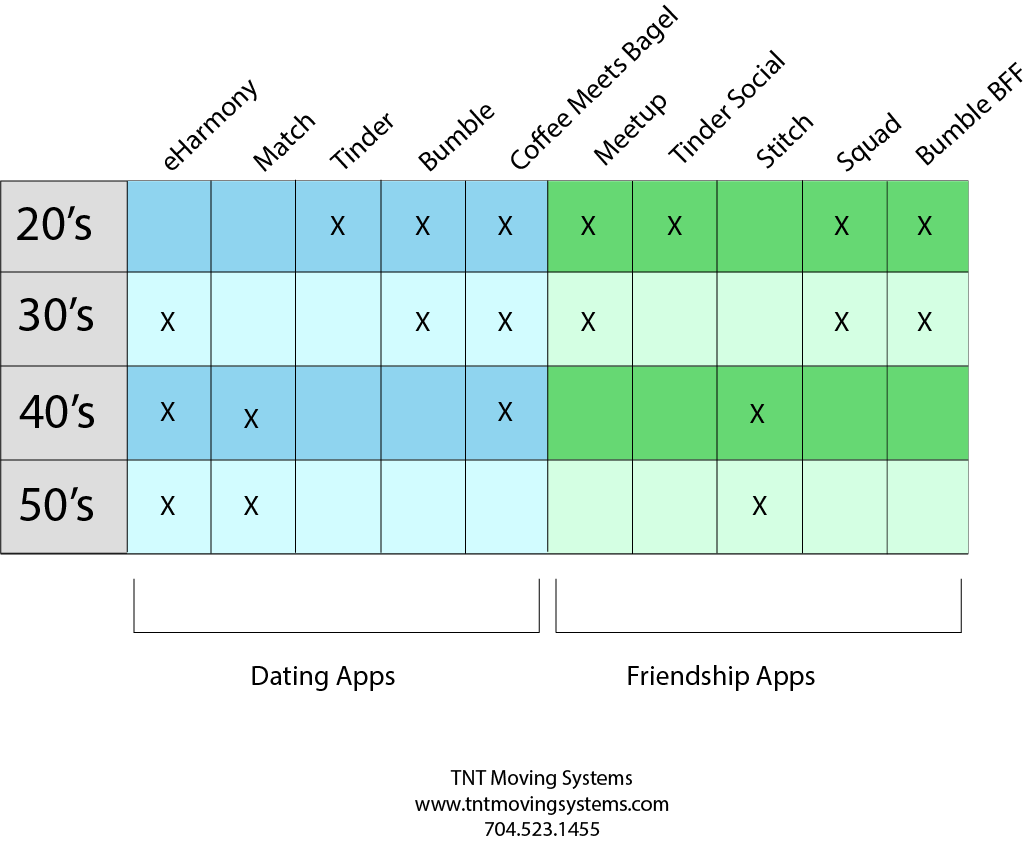
Making friends as a grown-up offers some unique challenges, but it’s not impossible. Taking the above recommendations a step further, here are some tips to make meeting people and trying new things a bit easier:

GET OUT OF THE HOUSE
Do you have a hobby? Want one?Taking a class is a great way to meet new people in your community and it doesn’t have to be expensive. Local colleges and school districts have community education classes (time to brush up on your French or figural drawing?) and libraries have lots of opportunities for learning with classes and programs featuring locals who can inform you about places to visit in your new community. Over 50? You likely have even more options to meet people. Senior centers, universities, and AARP offer an array of classes for varied interests.
Raise a glass! With the popularity of micro-breweries and wineries, the traditional “bar scene” is shifting. Check in advance for special release evenings, tastings, and concerts at your local vineyard or taproom. You can mingle in a relaxing environment and grab a couple of bottles to stock your new kitchen.
Patronize me, please! Do you love art? Museums? Baseball? Consider becoming a patron at a local museum or buy season tickets to a sports team. You’ll be supporting local institutions and meeting like minded people. Museums have programs including lectures, films, gallery talks, and member only events. A great chance to share your love of Monet! Buying season tickets to a favorite sport will give you a season’s worth of plans, and your seat mates will be able to offer up tips on the best players and the cheapest beer and hotdogs.
Put yourself out there — outside that is! Is running, hiking or sunrise yoga your thing? Look online for groups in your area to join. Local stores can help you make connections while you shop for a new yoga mat or that perfect jogging hat. Many parks have programs (often free) and guided hikes. You’ll get your exercise, meet new people, and discover nature in your own back yard.
Volunteer! Do you love dogs, cats, hamsters, parrots, rabbits, horses, and more? Animal shelters often need volunteers of all sorts. From cleaning up, to fundraising, to helping with adoptions, to fostering, the needs are great. Smaller communities often have historical societies or houses that could use a hand on weekends or perhaps you are a wizard of the web and can lend your talents to their social media. Hospitals, political organizations, schools, the performing arts and social organizations have a wide variety of volunteer needs. Soon, you’ll be helping to not only fill your planner, but you’ll be filling your heart and your friends list in no time!
GET SOCIAL
Did you move for a new job? Perhaps your Human Resources representative can provide some contact information about groups who specialize in your field of work. It may serve two purposes: it will give you a chance to network andmeet people with similar interests. You might also find that some companies have a mentoring program and/or a new colleague may be willing to show you around town and introduce you to others.
L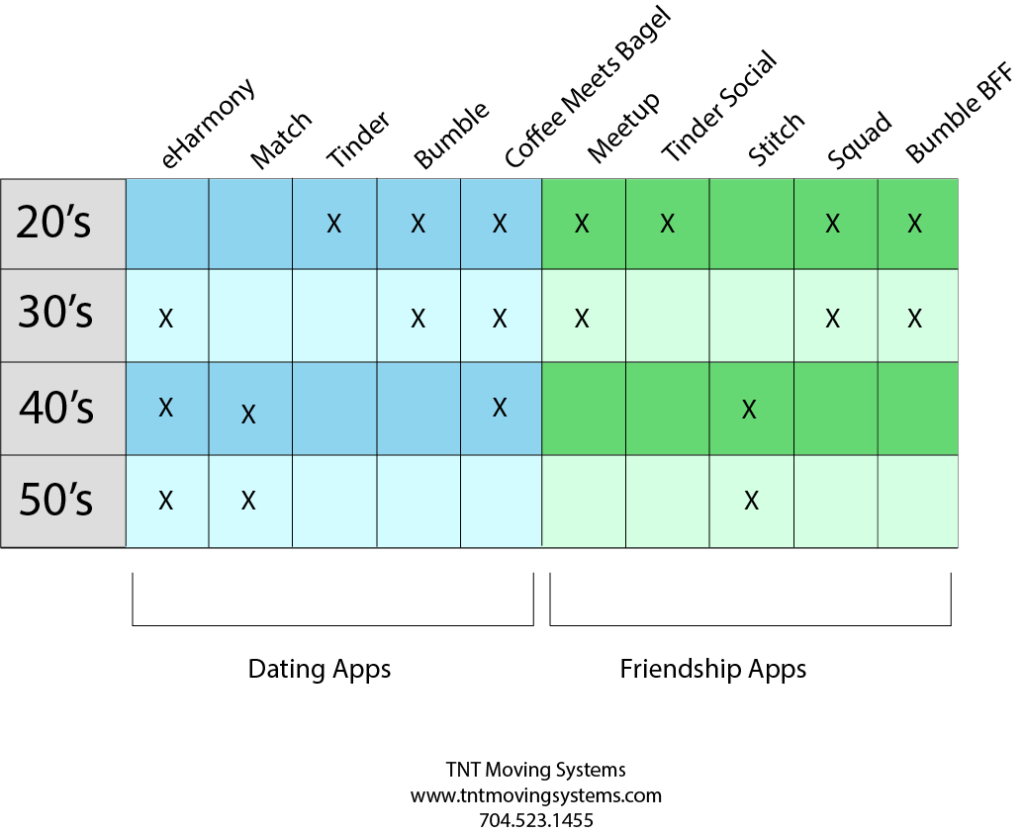 ooking for a job? Moving to a new area provides new opportunities to network. Look online for meetup groups, update your Linkedin and any applicable social media platforms to indicate your new city and highlight your skill set. Check out temporary opportunities, part-time and seasonal employment while you look for your new position.
 ooking for a job? Moving to a new area provides new opportunities to network. Look online for meetup groups, update your Linkedin and any applicable social media platforms to indicate your new city and highlight your skill set. Check out temporary opportunities, part-time and seasonal employment while you look for your new position.
Throw a party! Invite your new neighbors for a drop by meet and greet. Maybe you don’t want strangers in your house, does your community have a pool or a club house? Perhaps there is a homeowners meeting or social event coming up.
Get schooled. If you have a child in school (or are in school yourself), coordinate study groups in your home (church groups too), invite your children’s classmates over for supervised playdates, or volunteer for your school or church.
Do you have a secret talent? Maybe you are a pet sitter, great with gardens, or are handy with a hammer. Check local regulations first and offer your services to your neighbors. This will open the conversation and perhaps help your fill your wallet.
DO WHAT YOU LOVE
Make your favorite comfort foods. Maybe you are from an area known for chili and you are suddenly in chowder territory. Make yourself a pot (and perhaps invite a new friend to share). The holidays also offer up a great chance to make your traditional treats and introduce them to others.
Continue your hobbies. Before the move, do some internet searching and find out where you can practice Thai chi, skeet shoot, or horseback ride near your new digs. Or, maybe actual digging is what you dig! Those amateur archaeologist skills could prove a handy way to volunteer and help introduce you to those who came before.
Did you enjoy decorating? You have a blank canvas and the perfect opportunity to create your new nest. Check out the local antiques and boutiques and combine regional items with those you brought along with you.
Are you a reader? Join a book club or maybe even start one in your neighborhood at home. You could use this opportunity to trade some books or try out local authors.
Invite friends and family to visit! Spending time with loved ones can go a long way in helping you feel confident in your new environment and it lends the opportunity to be a tourist and play tour guide in your new city. Invite new friends or co-workers to join in and explore together!
While moving as an adult and making new friends does have challenges, it can also open you up to experiences and friendships you may never have imagined!
*Martijn Hendriks, Kai Ludwigs, and Ruut Veenhoven, “Why are Locals Happier than Internal Migrants? The Role of Daily Life,” Social Indicators Research 125 (2016): 481–508.
Subscribe to:
Posts (Atom)